Orlando dinner shows: what the tickets actually buy you
How much does an Orlando dinner show cost and what's included?
Expect roughly 55 to 85 USD per adult and 30 to 50 USD per child for a two-hour dinner show on US 192 or International Drive, plus tax and usually an 18-20% tip on the food and drink portion. The ticket covers a set meal served at your table and a themed live show; alcohol is often limited to beer, wine, or a couple of mixed drinks, and better seating categories add 15-30 USD per person.
The dinner show format, explained once
Orlando’s dinner shows are a specific product, and once you understand the shape of it, every ticket page on every venue’s website starts making sense. You buy one ticket that bundles a served meal with a roughly two-hour live show, performed in a large arena or themed hall rather than a traditional restaurant. There is no dinner-first-then-show sequence: the meal arrives in courses while the performance runs around you, timed so the entree lands during a lull and dessert during the finale.
Doors typically open 60 to 90 minutes before showtime for a preshow area — an armory to browse before a jousting tournament, a tiki-lit courtyard before a luau, an arcade floor before a fun-house format — and that window is worth using. It’s where photo opportunities, cash bars, and gift shops live, and arriving right at showtime means missing all of it and possibly your assigned entrance group.
Almost every one of these venues sits on US 192 through Kissimmee or on International Drive, both a short drive from the theme park corridor without touching the interstate. That’s a deliberate piece of the pitch: dinner shows are marketed as an evening that doesn’t require driving far after a full park day, which matters more than it sounds after 25,000 steps at Walt Disney World or Universal Orlando.
Seating tiers, and where the ticket price actually goes
The single biggest source of confusion — and disappointment — is seating category. These shows sell tickets in tiers (sometimes labeled by color, sometimes by section name), and the gap in experience between the cheapest and the mid-range tier is usually bigger than the gap in price.
In arena-format shows built around a jousting tournament, the lowest-priced section can put you off to the side or, worse, behind the action rather than facing the performance area straight on. The difference between that seat and the next category up is frequently just 10 to 20 USD per person — a modest jump that buys a full frontal view instead of a partial one. Booking the cheapest tier to save 15 USD, then spending two hours craning your neck around a pillar or watching the backs of performers, is the single most common regret reported about these shows, and it’s avoidable by reading the seating chart before booking rather than sorting by price.
Luau-format shows and fun-house formats are more forgiving on this point since seating is often long communal tables rather than tiered arena sections, but it’s still worth checking whether “premium” seating means closer to the stage or simply a better table location.
What’s actually on the menu, and what’s not
The meal is fixed-menu, served to the whole room at once, and built around something that can be produced at scale for a large audience — usually a protein (rotisserie chicken, pork, or a plant-based option on request), a starch, and vegetables, eaten by hand or with minimal cutlery depending on the show’s theme. It is not a restaurant meal, and it shouldn’t be booked as one. Dietary requests — vegetarian, gluten-free, allergies — are almost always accommodated, but only if flagged when booking, not at the table.
Drinks are the other place expectations run ahead of reality. Most tickets include a limited pour: a beer, a glass of wine, or a house cocktail or two over the course of the evening, plus unlimited soft drinks. Unlimited alcohol is not the default at this price point, and treating the ticket as an open bar leads to a surprising tab. Anything beyond the included pour is billed separately, and tipping is expected on top: servers work the tables throughout the performance much like restaurant staff, and 18 to 20 percent of the food and beverage total is the norm, not automatically added at every venue.
2026 price ranges by format
Prices vary by date, day of week, and how far ahead you book, so treat these as planning ranges rather than fixed numbers — always confirm the current price and taxes at checkout.
| Format | Adult (per person) | Child (per person) | Typical run time |
|---|---|---|---|
| Medieval jousting tournament | 65-85 USD | 40-50 USD | ~2 hours |
| Magic and comedy dinner show | 55-70 USD | 30-40 USD | ~2 hours |
| Polynesian-style luau with fire show | 70-90 USD | 40-55 USD | ~2.5 hours |
| Arcade-adventure fun house (activity-based, not seated dinner) | 40-60 USD | 30-45 USD | 1.5-2.5 hours |
Premium seating categories add roughly 15 to 30 USD per person on top of the base tier. None of these figures include Florida’s sales tax or the tip on food and drink, both of which land on top of the sticker price shown when browsing.
a medieval jousting tournament with a full dinner served at your table is the most established version of this format in the Kissimmee corridor, with knights, horses, and a scored tournament built around the meal.
For something calmer with live music and fire dancing, a Polynesian-themed luau with dinner and a live fire show runs on the same two-and-a-half-hour structure but trades jousting for hula and a torch-lighting finale.
Families who’d rather skip the sword fighting can book a comedy magic dinner show built around audience participation, which tends to run a notch cheaper and leans on younger kids getting pulled into the act.
A different category entirely, useful on a rainy evening or as a break from formal seating, is an arcade and mystery fun-house experience combining games with a themed adventure — it’s activity-based rather than a seated meal-and-show, and worth considering as an alternative rather than a substitute for the classic dinner-show format.
Who this actually suits, and who should skip it
Dinner shows work well for three groups specifically. Families with children roughly 4 to 12 get a built-in evening that requires no separate dinner reservation and holds attention through live action, audience participation, and a predictable two-hour arc. Groups of six or more — a multigenerational family, a reunion, several couples traveling together — get a single reservation that seats everyone together without splitting a restaurant party across tables. And anyone who wants an evening’s entertainment without a long drive after an already long park day benefits from the US 192 and International Drive concentration, minutes rather than an hour from most park-corridor hotels.
They do not suit travelers looking for a genuine culinary experience. The food is competent and plentiful but built for volume, not craft, and anyone measuring the evening against Orlando’s better independent restaurants will leave unimpressed. Solo travelers and couples seeking a quiet dinner should also look elsewhere — the format is loud, communal, and built around spectacle rather than conversation. And this guide doesn’t cover downtown Orlando’s bars and nightlife or the brewery tour circuit; those are different evenings entirely and get their own coverage.
Booking timing and practical notes
Outside major holiday weeks, booking a few days to two weeks ahead is generally enough to get a reasonable seating tier at a convenient showtime. Around Thanksgiving week, the last two weeks of December, and spring break in March, popular Friday and Saturday showtimes can sell out, so book further ahead if a trip falls in those windows — the same pattern that pushes up hotel and theme park pricing across the Orlando and Kissimmee area during those weeks.
Arrive during the preshow window rather than right at showtime: most venues assign entrance order by arrival, and early arrivals get first pick of photo opportunities and the shortest bar lines. Bring the show’s confirmation and check the venue’s policy on cameras and phones during the performance, since some formats (particularly the horse-and-jousting arena shows) restrict flash photography near the animals.
Parking is typically free or a modest flat fee at these standalone venues, a contrast with the 35 USD daily parking at the major theme parks. That, combined with no separate admission needed beyond the ticket, makes a dinner show one of the more predictable evening costs on a Central Florida itinerary — see the full breakdown in the trip cost planning guide.
Pairing a dinner show with the rest of the trip
A dinner show fits naturally on a travel day, a rest day between parks, or the evening after a half-day at ICON Park and International Drive, since it requires no early start the next morning. Families spacing out a one-week Central Florida itinerary often slot one in around the midpoint, after the first park marathon and before a springs or wildlife day.
For an evening with a different kind of spectacle, the after-dark ghost and haunted tours around Orlando run on a similar two-hour scale but skip the meal entirely. Families weighing an airboat evening instead should see the Kissimmee airboat tour guide, which covers a completely different kind of after-dinner outing on the marshes north of the parks.
Traveling with toddlers changes the calculus: the guide to Orlando with toddlers and preschoolers covers which of these shows tend to work for the youngest kids and which run too loud or too late for an early bedtime. Grandparents traveling with the family should also check seating comfort notes, since arena bench seating in some jousting venues isn’t ideal for anyone who needs back support through a two-hour show.
If evening entertainment is one line in a broader nightlife category, the nightlife and shows category page rounds up the rest of what’s bookable after dark around Orlando, and the Kissimmee activities page lists what else fills an evening in the same US 192 corridor. For a look further afield on a trip that also touches the coast, the best day trips from Orlando guide covers how an evening show fits around a full day out to St. Augustine or the Space Coast.
Orlando dinner shows: FAQ
How long does a typical Orlando dinner show run?
Around two hours from doors to final bow, including a preshow area (armory, luau grounds, or arcade floor) that opens 60-90 minutes before the show and a served meal that runs alongside the performance rather than before it.
Is alcohol included in the ticket price?
Rarely fully included. Most venues serve one or two rounds of beer, wine, or a house cocktail with the base ticket, then charge for anything beyond that. Soft drinks are usually unlimited; check the specific show’s policy before assuming otherwise.
Is the cheapest seating category worth avoiding?
Often yes. In arena-style shows like jousting tournaments, the lowest tier can sit you behind or beside the action rather than facing it, while the next tier up frequently costs only 10-20 USD more per person for a much better sightline.
Are these shows good for young children?
Generally yes. The two-hour format, loud sound design, and audience-participation moments are built for families with children roughly 4 to 12, and most venues seat groups together without assigned individual seats.
Do I need to book ahead for a 2026 visit?
Booking a few days to a couple of weeks ahead is enough outside major holiday weeks. Around Thanksgiving, Christmas week, and spring break, popular showtimes on a Friday or Saturday can sell out, so book those further in advance.
Where are most of these shows located?
The corridor along US 192 in Kissimmee and International Drive near the parks holds the largest concentration, both within a 15-30 minute drive of most Orlando-area hotels without needing the interstate at rush hour.
Can I skip dinner and just watch the show?
No. These are built as a single ticketed package with the meal served during the performance, not a separate dinner-then-show format, so there’s no lower-priced show-only option at most venues.
Is tipping expected on top of the ticket price?
Yes. Servers work the tables throughout the show and are tipped like restaurant staff, typically 18-20% of the food and beverage portion, sometimes prompted at checkout rather than added automatically.
Dinner shows and evening entertainment on GetYourGuide
Verified deep-linked GetYourGuide tours. Book through these links and we earn a small commission at no cost to you.
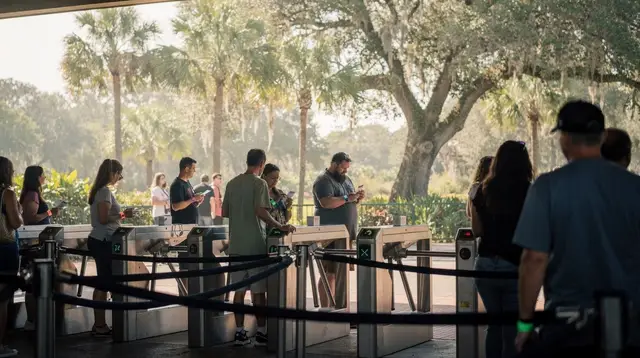
GetYourGuide does not provide a product photo for this activity — the image shows the meeting point, photographed by us.