When to see bioluminescence near Orlando: season and moon planning
When is the best time to see bioluminescence near Orlando?
The glowing plankton season runs from late May to early October, peaking in July and August when the lagoon water is warmest. Book a new-moon night, check the forecast a few days out, and hold a backup date since summer storms cancel trips often.
Two different glows, and why the dates matter
Most people who ask about “the bioluminescent kayak trip” near Orlando are picturing one thing, but the glow on Mosquito Lagoon actually comes from two unrelated organisms that show up in different halves of the year. Getting the season wrong is the single most common planning mistake, and it is an easy one to make because both phenomena get marketed under the same phrase.
From late May through early October, the light is produced by Pyrodinium bahamense, a microscopic dinoflagellate that flashes blue-green when disturbed by a paddle stroke, a fish, or a hand trailing through the water. This is the version behind the famous photos: bright, sudden, concentrated in the wake of movement. It builds through early summer and is generally most intense in July and August, when the lagoon water is at its warmest. It fades through September and is largely gone by early October.
In winter, a different organism takes over: ctenophores, commonly called comb jellies, produce a steadier, less explosive glow in the same lagoon. It is a real phenomenon and worth seeing, but it behaves differently — less about a burst of light from a paddle stroke, more a diffuse shimmer — and sightings are less predictable from week to week. Because of that variability, the great majority of operators concentrate their trips in the June-to-October window rather than running a comparable winter program. If a listing promises comb jelly bioluminescence in January, treat the promise as softer than the summer version.
| Season | Organism | Typical window | Character |
|---|---|---|---|
| Summer | Dinoflagellates (Pyrodinium bahamense) | Late May to early October, peak July-August | Bright, sudden flashes triggered by movement |
| Winter | Ctenophores (comb jellies) | Cooler months, variable | Steadier, less predictable, fewer trips offered |
This page is about choosing the right night. For what actually happens once you are on the water — what to bring, how the paddle works, what a guide does differently after dark — see kayaking the bioluminescent waters of Mosquito Lagoon.
Step one: pick the season deliberately
If the trip is the priority rather than a bonus add-on, build the visit around June through September rather than hoping a winter evening delivers a comparable show. A family flying in for a week in December can still see the lagoon, alligators, and birdlife on a daytime paddle, but should not expect the same bioluminescence that a July guidebook photo shows.
Within the summer window, August tends to have the warmest water and often the most reliable glow, but it also carries the worst combination of heat, humidity, and mosquitoes, plus the highest chance of an afternoon storm rolling into the evening. Late May through June and September are reasonable compromises: still within season, somewhat cooler, and slightly less likely to run into a summer thunderstorm pattern. None of this is exact — the dinoflagellate bloom is a biological process, not a schedule, and it varies year to year.
Because the season is fixed and narrow, this is one of the rare Space Coast activities worth choosing dates around rather than fitting into whatever week already works for the rest of the trip. Most other regional day trips are far less date-sensitive; see the best day trips from Orlando for how the bioluminescence paddle compares to options like the springs or the Gulf beaches that can be scheduled almost any week of the year.
Step two: cross-check the moon calendar
Moonlight is the second variable, and it matters as much as the calendar month. Any light in the sky, including a bright moon low on the horizon, washes out the glow enough that a trip on a full-moon night can be genuinely disappointing even in peak season. Operators build their schedules around the new moon, running trips through roughly a five-to-seven-night window centered on it — the new moon night itself plus a couple of nights on either side, when the moon has not yet risen or sets early.
The practical approach: look up the new moon dates for the month of travel, then look at which nights near it fall within the trip. If the visit is a full week, there is a decent chance a new-moon window lands inside it; if it is a long weekend, the odds are lower and the date needs to be chosen around the moon phase rather than around which day is most convenient.
| Moon phase | Effect on visibility |
|---|---|
| New moon (and 2-3 nights either side) | Best — darkest sky, glow most visible |
| Quarter moon | Noticeably dimmed |
| Full moon | Weakest — often not worth booking |
Step three: watch the forecast, not just the calendar
Weather is the third layer, and it cuts both ways. A cloudy, moonless sky is actually good for bioluminescence — clouds block ambient light the same way a new moon does. What ends the evening is an active thunderstorm: Florida’s central coast sees a near-daily summer storm pattern, typically building in the afternoon and sometimes lingering into early evening before clearing. Guides will delay, reroute, or cancel a launch if lightning is anywhere near the lagoon, for straightforward safety reasons — open water and an electrical storm do not mix.
That means a booking made for a specific date in July or August has a real, non-trivial chance of being cancelled or rescheduled for weather. This is not a flaw in the operator; it is the nature of a Florida summer evening, and it is worth building into the plan from the start rather than discovering it the night of.
Step four: book early, and book a real backup
The nights around the new moon in peak season are the ones every operator and every other visitor wants, so they sell out first — often weeks ahead, sometimes further out for a Friday or Saturday in July or August. Booking a single date and treating it as the whole plan is the mistake to avoid. Because summer storms cancel trips with some regularity, a short trip that pins the bioluminescence to one evening with no other date available is exposed: if that night gets rained out, there is no second chance.
A safer structure for a short visit is either a trip long enough to include two candidate nights near the new moon, or a booking flexible enough to shift by a day if the operator reschedules. Longer itineraries around the Space Coast naturally solve this — see the ten-day space history and Atlantic shore itinerary or the six-day parks and Space Coast plan for families with teens for structures that leave room for a weather day. A single overnight trip out from Orlando has far less slack; see one day at Kennedy Space Center from Orlando for how tight a single-day Space Coast visit already runs before adding an evening paddle.
Filling the daylight hours before the paddle
Because the bioluminescence trip only happens after dark, most visitors build a full day around it rather than driving out to the coast just for an evening launch. Kennedy Space Center Visitor Complex sits on Merritt Island about an hour east of Orlando, in the same general direction as the Mosquito Lagoon launch points, which makes it a natural daytime pairing — see a day at the Kennedy Space Center Visitor Complex for how much time the site itself needs. If the travel dates happen to line up with a scheduled launch from Cap Canaveral or Complex 39A, watching a rocket launch from Titusville covers where to stand and how the viewing windows work, and a daytime launch viewing plus an evening bioluminescence paddle is a common way to fill one Space Coast day without doubling back to Orlando in between.
Travelers who would rather spend the daylight hours on the water than at the visitor complex have other paddling options nearby; the same coastline and its beaches are covered in the broader Space Coast destination guide. For a different kind of Florida paddling entirely — spring-fed, clear, and calm rather than tidal lagoon — paddling Wekiwa Springs run is a daytime trip near Orlando itself, worth considering for a visit whose dates do not line up with a new moon at all, since the spring itself is a worthwhile paddle regardless of moon phase or season.
The part nobody puts in the brochure: mosquitoes and heat
Peak bioluminescence season overlaps almost exactly with peak Florida mosquito season. Mosquito Lagoon earned its name honestly, and the marshes bordering it are worse than the beach or the theme park corridor. An August evening paddle means still, humid air, water in the high 20s Celsius, and mosquitoes that get more active as the sun goes down — right when the trip typically starts. Long sleeves, repellent applied before arrival (not after boarding), and accepting some discomfort are part of the deal for the best summer glow. A cooler evening in late May or September trades a little glow intensity for a more comfortable outing, which is a fair trade for travelers sensitive to heat or bites.
For general summer planning around heat and the daily storm pattern beyond this one trip, see Orlando’s summer heat and storms and, for the wider hurricane season context that runs June through November, the hurricane season travel guide.
Booking the trip
Several operators run bioluminescent paddling out of the Cocoa Beach and Merritt Island area, most using clear-bottomed kayaks or paddleboards that let the glow show beneath the hull as well as around the paddle. A small-group option is worth the modest extra cost over a large mixed tour, both for a better guide-to-guest ratio in the dark and for more flexibility if a launch time needs to shift for weather.
a clear-bottom kayak or paddleboard bioluminescence tour on Mosquito Lagoon is the standard option for couples or small families. For a private group of up to six, a private after-dark bioluminescence outing from Cocoa Beach allows more control over the exact launch window relative to the new moon. A smaller-group alternative closer to the refuge is a small-group clear kayak bioluminescence tour based on Merritt Island. Travelers who would rather stay on a boat than paddle can pair a daytime visit with a sunset cruise out of Cocoa Beach as a lower-effort way to be on the water at dusk, though it does not substitute for the dedicated bioluminescence paddle after full dark.
For the region around the launch point, see Cocoa Beach and the broader things to do on the Space Coast. Bioluminescent trips are grouped with other after-dark and water activity under bioluminescent tours and alongside kayak and paddleboard options across the region.
Bioluminescence trip planning: frequently asked questions
What causes the bioluminescence in Mosquito Lagoon?
From late spring through early fall, the light comes from Pyrodinium bahamense, a dinoflagellate that flashes blue when the water is disturbed by a paddle or a hand. In winter, a different organism, comb jellies known as ctenophores, produce a steadier glow in the same lagoon.
Is winter bioluminescence as good as summer?
It is different, not necessarily lesser. Ctenophores glow more steadily and less explosively than the summer dinoflagellates, and sightings are less predictable since their numbers vary more from week to week. Most operators run trips primarily from June through October for that reason.
Does the moon phase really matter?
Yes. Any moonlight above a quarter moon washes out the glow, so operators schedule around the new moon and the nights just before and after it, roughly a five to seven night window each month.
Can a cloudy or rainy night ruin the trip?
A cloudy sky with no moon actually helps by keeping the water dark. An active thunderstorm or lightning does not: Florida guides cancel or reschedule rather than put kayaks on open water during a storm, which is common on summer afternoons and can linger into evening.
How far in advance should I book?
Several weeks ahead for a peak-season new-moon date, especially July and August weekends. The handful of ideal nights each month sell out first, and later bookings are left choosing between a moonlit night or a weeknight.
Are mosquitoes a real problem on these tours?
Yes, especially in August evenings around the marshes bordering Mosquito Lagoon. Long sleeves, repellent applied before arrival, and accepting some discomfort are part of the trade-off for peak-season glow.
What happens if my trip is cancelled for weather?
Most operators offer a rebooking rather than a strict refund, but availability on other new-moon nights during the same trip is not guaranteed. Building a backup date into the itinerary matters more than the cancellation policy itself.
Where exactly does this happen?
Mosquito Lagoon, part of the Indian River Lagoon system bordering the Canaveral National Seashore and Merritt Island north of Cocoa Beach, about an hour east of Orlando.
Trip planning guides for Orlando on GetYourGuide
Verified deep-linked GetYourGuide tours. Book through these links and we earn a small commission at no cost to you.
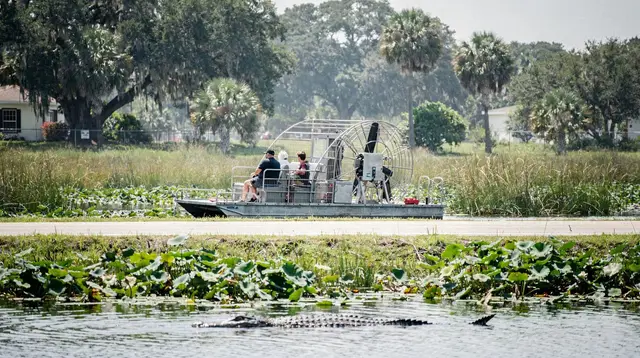
GetYourGuide does not provide a product photo for this activity — the image shows the meeting point, photographed by us.