Orlando summer heat and afternoon storms: how to plan around them
How hot does it get in Orlando in summer, and does it rain every day?
June through September runs 32 to 34 C by afternoon with heavy humidity, and a short, intense thunderstorm hits most days between roughly 2 and 5 p.m., usually lasting under an hour. Outdoor rides and water parks pause during lightning, so a summer park day works best split around a midday indoor break rather than pushed straight through.
What a July afternoon in Orlando actually feels like
Central Florida sits in a subtropical climate, and from June through September that means two things arrive together every day: heat and moisture. Daytime highs run 32 to 34 C, nighttime lows stay near 24 C, and the humidity keeps the heat index — what the air actually feels like on skin — well above the number on the thermometer. Walking between attractions at Orlando, Florida or standing in an unshaded queue at midday is the single most physically demanding part of a summer visit, more than the walking distance itself.
The second thing that arrives every day is rain, and it comes on a schedule reliable enough to plan a whole trip around. Warm, moist air rises through the morning, clouds build through early afternoon, and by roughly 2 to 5 p.m. it lets go: a short, often heavy thunderstorm, usually gone within an hour. This corridor between Tampa and Orlando is one of the most lightning-struck stretches of the United States, so these are not light showers — they come with real lightning, sometimes with gusty wind, and parks take them seriously.
Building a park day around the storm, not against it
The mistake most first-time summer visitors make is planning a full day of outdoor riding from open to close, as if the weather were incidental. Locals and repeat visitors structure the day differently, and it is worth copying:
- Rope drop to early afternoon — arrive at opening, when the air is still relatively cool and the sky is clear. This window, roughly 9 a.m. to 1 p.m., is also when queues are shortest, so it does double duty: comfort and efficiency both favor going early.
- Midday break, indoors — from around 1 to 4 p.m., step away from outdoor lines. This is exactly when the heat index peaks and the storm is most likely to arrive. A hotel pool break, a return to an air-conditioned room, or a stretch of indoor attractions, shows, and shopping inside the park covers this window without losing much.
- Late afternoon through close — by 4 or 5 p.m. the storm has usually passed, the sun is lower, and the evening cools slightly. Parks in summer often keep extended hours, so this stretch can run late into a comfortable night, including any nighttime shows.
This pattern is not unique to any one park. It works the same way at Orlando, Florida for the Walt Disney World tickets and Universal Orlando tickets and passes explained resorts alike, and it is worth building into a how many days do you need in Orlando? plan before booking dated tickets, since a rushed one-day visit has no slack to absorb an afternoon closure.
The same logic applies to newer additions. Universal’s Epic Universe first-visit guide is largely built around covered walkways and indoor land transitions, which makes it a slightly easier summer park than an older, more open layout — but it is not immune, and a comparison of Magic Kingdom versus Epcot or Disney World versus Universal Orlando for a summer trip should weigh outdoor queue exposure alongside ride lineup. A park with more shaded, covered queuing loses less to a storm delay than one built mostly in open sun.
Why outdoor attractions close, and what stays open
Theme parks operate under strict lightning protocols. When lightning is detected within a set radius, outdoor rides, especially anything elevated, metal-heavy, or open-air, close immediately and stay closed until a fixed interval passes with no further strikes nearby — often 20 to 30 minutes after the last detected strike, which can stretch a single storm’s closure well past the rain itself. This is not a judgment call made ride by ride; it is a safety threshold applied consistently across the resort.
What keeps running: indoor attractions, most shows, restaurants, and shopping. A Disney Lightning Lane explained reservation on an outdoor ride can be affected if the ride closes mid-window, so it is worth checking the app rather than assuming a scheduled return time still holds.
Water parks close more completely than dry parks do. At Orlando water parks, pools and slides sit in open air with no indoor fallback, so a lightning alert clears the water entirely and holds guests under cover until it passes — sometimes more than once in an afternoon. Anyone planning a water park day in summer should treat the early morning hours as the reliable window and expect the early afternoon to be interrupted, not skip that morning slot to sleep in.
The planning trap: one day, one outdoor commitment
The recurring mistake in summer itineraries is putting the only available day for a nighttime spectacular, a water park, or an outdoor dinner show on the same day as a single park visit, with no backup if the storm runs long or a second wave follows the first. A fireworks show scheduled for 9 p.m. can be delayed or cancelled by lightning that arrives late; a water park day booked for the one afternoon a family has in Orlando can lose two hours to a closure with nothing to fall back on.
The fix is redundancy, not avoidance. Build at least one indoor or weather-flexible option into any day that depends on outdoor timing:
- If a nighttime show matters, pick a trip with more than one evening in the parks corridor, not a single night.
- If a water park is the priority, go in the first morning hours and treat the afternoon as a bonus, not the plan.
- Keep an indoor fallback in reserve — a museum stop, an arcade, or a dinner show like Medieval Times, which runs regardless of what the sky is doing outside. Book the Medieval Times dinner and show as a storm-proof evening that does not depend on the weather clearing.
Hydration, clothing, and gear that actually help
The heat index, not the air temperature alone, is what causes trouble in a Florida summer. A few practical habits make the difference between a manageable day and a miserable one:
- Drink water constantly, not just when thirsty. Refillable bottles fill free at water fountains throughout every park, and thirst lags behind actual dehydration in heat this humid.
- Wear quick-dry fabric, not cotton. Cotton holds sweat and rain and stays wet for hours; technical or quick-dry clothing sheds both and dries between the morning heat and the afternoon downpour.
- Carry a poncho, not an umbrella. Summer storms bring wind gusts that turn umbrellas inside out within minutes, and most queues and walkways are too tight for one anyway. A packable poncho covers the burst of rain and folds away once it passes.
- Use the midday break for more than air conditioning. A change of shirt, a reapplication of sunscreen, and a real sit-down meal in the cool all make the return trip to the park in late afternoon noticeably easier.
- Watch for heat-related symptoms, not just discomfort. Dizziness, headache, or stopping sweating are signs to get indoors and cool down immediately, not to push through.
Getting around, and traveling with kids in summer heat
Central Florida’s summer weather also changes how a day of driving should be planned, not just a day of walking. Driving the I-4 and traffic already runs slower at peak hours, and a sudden afternoon downpour with reduced visibility adds to that — leaving buffer time before a dinner reservation or an evening show matters more in July than in January. Anyone flying in should build the same buffer into MCO airport arrival and transfers, since a storm cell over the airport can hold ground traffic and rideshare pickup lines longer than a clear-weather afternoon.
Traveling with young children raises the stakes on the midday break rather than removing it. Orlando with toddlers and preschoolers already recommends a stroller nap and pool window in the early afternoon for its own reasons; in summer that window lines up almost exactly with the daily storm, so the two needs solve each other rather than compete. Orlando with teenagers is the group most tempted to skip the break and push through the heat for one more ride — worth resisting, since heat exhaustion symptoms show up in teenagers just as fast as in younger kids, and a shaded, air-conditioned reset makes the evening hours markedly more enjoyable for the whole group.
The other side of a Florida summer: springs and bioluminescence
Summer’s heat and storms are not purely an obstacle — two of the region’s best warm-season activities exist because of it, both away from the parks corridor.
Florida’s spring-fed rivers stay at a constant 22 C (72 F) year-round, which makes them feel refreshingly cool in August even though they run the same temperature in January. A morning on the water avoids the worst of the afternoon heat and storm window entirely. Paddle the Rock Springs Run with a picnic lunch included for a half-day that is done and dry well before the 2 p.m. storm line typically arrives, or take a guided kayak tour at Blue Spring, outside the winter manatee season but still cool water and quiet paddling. Full planning detail is in Florida springs day trip planner from Orlando.
On the Space Coast, June through September is bioluminescent kayak season on the Indian River and Mosquito Lagoon — a night paddle through water that glows blue-green with every stroke, driven by a dinoflagellate that is naturally more active in the warm months. The display is strongest around the new moon, when the sky is darkest, and it varies night to night, so it is worth planning around the moon calendar rather than promising a guaranteed show. Details on timing sit in bioluminescent kayaking on Mosquito Lagoon and when to see bioluminescence near Orlando; the trip pairs naturally with a Space Coast day covered at Space Coast.
Inland, the same early-morning logic applies to Wekiwa Springs run kayaking and to a paddle on the Rainbow River, both spring-fed and both a constant 22 C regardless of the month. A summer morning on either river beats the same stretch of water in December for one simple reason: the air around the 22 C water is hot instead of cool, so the contrast that makes the springs feel special is stronger in July than in any other season. The Space Coast also runs its own summer draw independent of the storm pattern — watching a rocket launch from Titusville, roughly an hour east of Orlando near the Kennedy Space Center, where launches go from Cap Canaveral and Complex 39A and a clear evening sky (storms permitting) gives an open view across the Indian River.
For an evening that sidesteps ground-level heat and storms altogether, an after-hours flight lifts above the worst of the afternoon disruption once the storm line has cleared. Take an after-hours helicopter flight over the theme parks for a different, cooler view of the corridor from above.
What summer is not: hurricane season
The near-daily afternoon storm described here is routine Florida summer weather, not a tropical system. Atlantic hurricane season runs officially from June 1 to November 30, with the highest risk from August through October, and it is a separate planning question with its own set of precautions — flight cancellations, park closures ahead of a storm, and the value of trip insurance. It is covered in full at hurricane season travel guide for Central Florida and should not be confused with the ordinary afternoon thunderstorm pattern, which happens on clear-track, no-named-storm days just as reliably.
Summer versus the rest of the year
| Season | Daytime high | Storm pattern | Crowd and price level |
|---|---|---|---|
| Summer (Jun–Sep) | 32–34 C | Near-daily afternoon storm, ~1 hour | High — US school holidays |
| Fall (Oct–Nov) | 27–29 C | Storms taper off | Moderate, improving after holidays |
| Winter (Dec–Feb) | 22 C | Rare, dry season | High at Thanksgiving/Christmas, otherwise lower |
| Spring (Mar–May) | 26–31 C | Dry until May | High in March (spring break) |
For a side-by-side on when to go instead, see Orlando in winter and spring break and Easter crowds in Orlando; for how much heat itself factors into the decision, Orlando summer heat and afternoon storms pairs with the broader seasonal overview at things to do in Orlando.
The short version
Summer in Orlando is hot, humid, and interrupted by a short, forceful storm most afternoons — that part is close to guaranteed, not a risk to gamble against. Build the day around it: go early, retreat indoors at the peak heat and the peak storm window, and come back for a cooler evening. Never stake the only water park visit, the only night show, or the only bioluminescent kayak trip on a single unprotected afternoon. Done that way, summer’s drawbacks — the heat, the humidity, the daily rain delay — are a scheduling problem, not a trip-ruining one, and the season’s real rewards, warm nights, glowing water on the Space Coast, and cool spring water inland, are worth planning around rather than around.
Season by season travel guides on GetYourGuide
Verified deep-linked GetYourGuide tours. Book through these links and we earn a small commission at no cost to you.
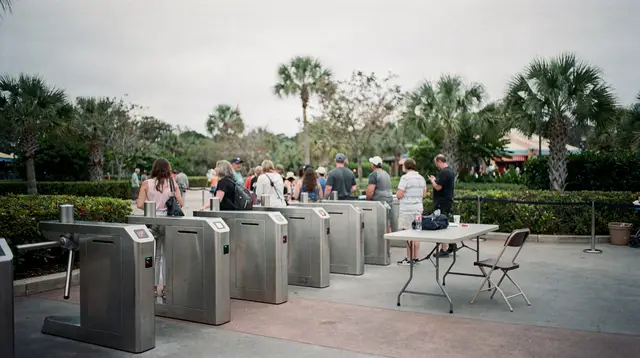
GetYourGuide does not provide a product photo for this activity — the image shows the meeting point, photographed by us.