St. Augustine ghost walks: what the tours actually show you
Are St. Augustine ghost tours worth it?
They're worth it for one tour, not two. Most walking tours cover the same handful of buildings around St. George Street, the old Huguenot Cemetery, and the Castillo de San Marcos, so a second tour the same night mostly repeats the first. Pick one format that fits your group and budget.
Why St. Augustine sells more ghost tours than anywhere else in Florida
St. Augustine is the oldest continuously occupied European-founded city in the United States, settled in 1565, and its narrow downtown has been rebuilt, burned, and rebuilt again for four and a half centuries. That density of history in a few compact blocks around St. Augustine is exactly what a ghost tour needs: real buildings with documented deaths, epidemics, fires, and a fort that saw two centuries of conflict. It is also, bluntly, a business. More companies run evening ghost tours here than in any other Florida town, and the routes and scripts overlap more than the marketing suggests.
None of this means the tours are a scam. The better operators do real research and stand in front of buildings that genuinely have a documented past, near the old Huguenot Cemetery, the walls of the Castillo de San Marcos, and the lanes off St. George Street. What matters is picking the one format that fits your group, understanding that a single tour will cover most of what the genre has to offer, and knowing where the sales pitch outruns the history.
This guide covers the walking tours, the tram-based tours, and the single-building evening tours. It does not cover the daytime historic walk through the old town, which has its own guide, or the food-focused evening walks, which are also covered separately.
What a ghost tour in St. Augustine actually is
Strip away the marketing and a St. Augustine ghost tour is narrated local history, delivered after dark, with the darker and stranger episodes emphasized. A guide leads a group on foot or in a covered vehicle through several blocks of the old town, stopping at six to ten locations, telling a five- to ten-minute story at each one. The stories draw on real events: yellow fever outbreaks, a Spanish colonial hospital, the Castillo de San Marcos as both fortress and prison, and houses where documented deaths occurred. Ghost sightings and supernatural claims get layered on top, usually framed as “some visitors report” rather than asserted as fact by the more careful guides.
What you are paying for is performance and atmosphere as much as information. A good guide holds a group’s attention in the dark for an hour or more, times the reveals well, and knows the difference between a documented fact and a local legend, and says so. A weak guide reads from a script and rushes between stops. Reviews vary company to company and even guide to guide within the same company, which is normal for this kind of product.
The three formats, and who each one suits
Small-group walking tours
This is the core product. A guide leads 10 to 25 people on foot through the old town, typically starting near the Castillo de San Marcos or the old city gate, and finishing near St. George Street or the Huguenot Cemetery. Walking tours run 75 minutes to two hours and cover roughly a mile, on brick and coquina sidewalks that are uneven in spots.
The Dead Walk ghost tour and the Ghosts and Gravestones walking tour both fall in this category, and both are reasonable choices for families with older children and for most adult groups. Expect roughly 25 to 35 USD per adult, before local sales tax.
This format suits: first-time visitors, families with kids roughly 8 and up, and anyone who wants one evening activity that covers a decent slice of the old town’s history along the way.
Adults-only walking tours
A handful of tours are marketed specifically for adults, with franker language, darker material, and sometimes a stop at a bar or a claim of paranormal investigation equipment. The adults-only walking ghost tour fits here. Pricing tends to run similar to the standard walking tours, sometimes slightly higher, in the 30 to 40 USD range.
This format suits: couples and adult friend groups who want a sharper, more atmospheric version of the same walk, not a fundamentally different route.
Single-building evening tours
A smaller number of tours skip the walking route entirely and spend the evening inside one historic property. The Ximenez-Fatio House evening visit is the clearest example: a preserved early-19th-century boarding house where the story stays with one building’s documented residents and deaths rather than a survey of the whole old town. These run shorter than the walking tours, often close to an hour, and cost more per minute, typically 35 to 45 USD, because the group is smaller and the access is more specific.
This format suits: visitors who find walking after dark tiring, and anyone who wants depth on one property rather than a broad sweep of the old town. It is also the best option if mobility is a concern, since the group mostly stands or sits rather than covering a mile on foot.
Tram and trolley tours
A covered, motorized tour moves a larger group along a longer loop with brief stops, sometimes as part of a broader historic sightseeing product rather than a dedicated ghost tour. This suits travelers who cannot manage an hour of walking, older visitors, or families with a stroller, but it trades away the intimacy of a small group standing quietly outside a dark building. If daytime sightseeing by trolley is the priority rather than the ghost angle specifically, the hop-on-hop-off trolley guide covers that separately.
Comparing the formats at a glance
| Format | Typical length | Typical price (2026, before tax) | Best for |
|---|---|---|---|
| Small-group walking tour | 75 min–2 hours | 25–35 USD | First-timers, families with older kids |
| Adults-only walking tour | 75 min–2 hours | 30–40 USD | Couples, adult groups wanting sharper content |
| Single-building evening | About 1 hour | 35–45 USD | Depth on one property, limited mobility |
| Tram or trolley tour | 1–1.5 hours | 20–30 USD | Older visitors, strollers, less walking |
Prices are rough 2026 ranges per adult and move with the date and operator. Weekend evenings in October, and around Thanksgiving and Christmas, sit at the top of these ranges or above them.
The trap: booking two tours the same night
This is the single most common mistake visitors make with St. Augustine ghost tours, and it is worth stating plainly. The old town’s haunted-history footprint is small, maybe six or seven blocks, and every company draws from the same pool of buildings: the Castillo de San Marcos, the old Huguenot Cemetery on Cordova Street, the Tolomato Cemetery, a handful of houses and inns along St. George Street and Aviles Street, and the old city gate. Book a walking tour from one company and an adults-only tour from another on the same trip, and you will likely stand in front of some of the same buildings twice, hearing two versions of overlapping stories.
The exception that makes sense is pairing a walking tour with the single-building evening format, since the Ximenez-Fatio House style tour goes somewhere the street-level walks do not: inside. A walking tour plus one focused indoor evening covers genuinely different ground. Two walking tours from two different companies, or a walking tour plus an adults-only tour, mostly do not.
If the appeal is more general old-town history rather than the supernatural angle specifically, the daytime historic walking tour and a visit to the Castillo de San Marcos cover much of the same physical ground without the ghost framing, and pairing one of those with a single evening ghost tour gives a fuller trip than stacking two evening tours back to back.
Booking timing and crowds
October is the peak month for ghost tours in St. Augustine, driven by Halloween, and popular evening departures on weekends can sell out several days in advance. The weeks around Thanksgiving and Christmas are the second crowd spike, not because of Halloween but because St. Augustine’s Nights of Lights display draws large evening crowds downtown, which fills sidewalks and competes for tour company staff and departure slots. Outside those windows, most evenings have same-day or next-day availability.
Winter evenings run cool by Florida standards, often in the 10 to 15 C range after sunset, so a light jacket matters more than it would during the day. Summer evenings stay warm and humid well into the night, closer to 27 to 29 C at 9 p.m., so light, breathable layers beat anything heavy. Either season, walking shoes with real support are the one non-negotiable item: the routes cover coquina paving and brick sidewalks that are uneven even in daylight, and worse to navigate in the dark.
Getting there and combining with the rest of a St. Augustine evening
St. Augustine sits about 170 km, roughly two hours, north of Orlando, which makes it a long day trip or an overnight rather than a quick evening errand. Visitors basing themselves in Orlando for the theme parks and adding St. Augustine typically build it into a one-day trip from Orlando or an overnight, since a ghost tour starting after dark and a two-hour drive home afterward is a long night for anyone, especially with kids.
Most ghost tours start near the old city gate or the Castillo de San Marcos, both within walking distance of the historic downtown’s parking and the St. Augustine harbor area if a daytime cruise is also on the itinerary. For a broader look at what else fills a St. Augustine day beyond the evening tour, the full guide to the old town and the roundup of things to do in St. Augustine cover the daytime options, while the ghost tour category page lists the current evening options across the state, not just this one town. Getting there without a rental car from the Orlando side generally means a private driver or an organized day tour, since public transit does not connect the two directly; the broader beyond the theme parks piece touches on that trade-off for day trips generally.
What the tours get right, and what to be skeptical of
The credible core of a St. Augustine ghost tour is the history: the Castillo de San Marcos really did hold prisoners, the city really did lose residents to yellow fever epidemics in the 19th century, and several of the buildings on standard routes have documented deaths tied to specific rooms or events. A guide who separates that documented history from the folklore layered on top, using phrasing like “the story goes” rather than stating a haunting as fact, is doing the job honestly.
What deserves skepticism is anything presented as guaranteed: a promise that you will see or feel something specific, or marketing that implies paranormal activity is a predictable, repeatable event. It is not. Some nights a guide tells a good story and the old town feels genuinely eerie in the dark; other nights it is just a pleasant walk with some Florida history attached. Treat the ghost framing as the hook that gets you walking through a genuinely old, genuinely interesting city after dark, and the history as the part that is actually reliable.
St. Augustine ghost tours: frequently asked questions
Are St. Augustine ghost tours appropriate for kids?
The standard small-group walking tours are generally fine for children old enough to sit through an hour of storytelling, roughly age 8 and up, since they lean on history and atmosphere rather than jump scares. Adults-only tours use franker language and darker material and are not built for children.
How much do St. Augustine ghost tours cost in 2026?
Expect roughly 25 to 35 USD per adult for a standard small-group walking tour, and somewhat more, often 35 to 45 USD, for a themed evening inside a single historic building. Prices are before local sales tax and vary by date and operator.
How long does a ghost tour in St. Augustine last?
Most walking tours run 75 minutes to two hours. A single-building evening, such as a tour focused on one house, tends to run shorter, closer to an hour, since the group stays in one location instead of walking between sites.
Should I book two different ghost tours in one trip?
One is usually enough for a single visit. The walking routes overlap heavily around the old town core, and guides from different companies often tell versions of the same handful of stories about the same buildings, so a second tour the same night delivers diminishing returns.
What should I wear on a St. Augustine ghost tour?
Walking shoes with real support, not sandals, since the routes cover uneven coquina sidewalks and brick paths after dark. In winter, add a light jacket for the evening cool; summer evenings stay warm and humid, so light layers work better than anything heavy.
Do the tours go inside haunted buildings?
Walking tours mostly stay on the street and describe buildings from outside, pointing at windows and courtyards. A small number of tours are built specifically to go inside one historic property, such as a preserved house museum, and those are the ones to book if being indoors is the point.
When do St. Augustine ghost tours sell out?
October is the tightest month, driven by Halloween demand, along with the weeks around Thanksgiving and Christmas when the town’s Nights of Lights display pulls in extra evening crowds. Popular small-group departures on weekend evenings in those windows can sell out days ahead.
Is a tramway ghost tour different from a walking tour?
Yes. A covered tram or trolley format moves a larger group along a longer route with brief stops, which suits visitors who cannot manage an hour or more of walking, including older travelers or families with strollers. The trade-off is less intimacy and less time lingering at any one spot than a small walking group gets.
Season by season travel guides on GetYourGuide
Verified deep-linked GetYourGuide tours. Book through these links and we earn a small commission at no cost to you.
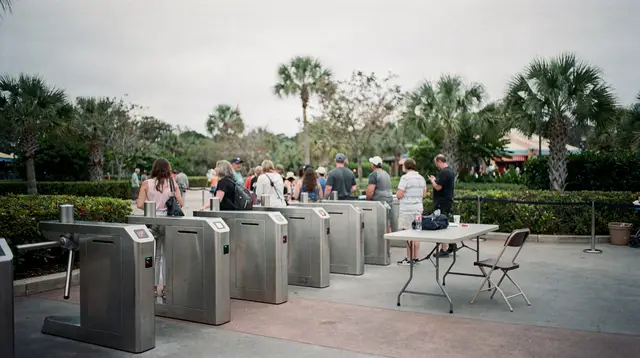
GetYourGuide does not provide a product photo for this activity — the image shows the meeting point, photographed by us.