St. Johns River eco-cruise: what you'll actually see
What will I actually see on a St. Johns River eco-cruise?
Alligators sunning on the banks, ospreys and great egrets working the shoreline, and turtles on logs are close to guaranteed on a one- to two-hour cruise from Sanford. Manatees are a winter possibility near the spring-fed tributaries, not a summer one, and nothing here is promised.
A slow river, not a theme park attraction
The St. Johns River is the quiet counterpoint to everything else in central Florida. No queue times, no park map, no character meet-and-greet — just a wide, dark-tannin river winding through cypress and marsh, with a narrator pointing out what’s on the bank. It leaves from Sanford, on the north shore of Lake Monroe where the river opens into something closer to a lake than a channel, about 45 minutes from Orlando by car. That short drive is part of the appeal: you’re out of the parks and into working Florida wetland faster than you can finish a rest-stop coffee.
This guide covers what a passenger actually sees on a St. Johns River nature cruise, the formats worth choosing between, and the one mistake that turns a wildlife cruise into an expensive boat ride with nothing to show for it. It does not cover airboats, which are a different vehicle for a different stretch of water — see the airboat guide for Kissimmee if that’s what you’re after — and it does not cover manatee viewing at Blue Spring, which has its own dedicated guide and works on a different clock than a river cruise.
What you’ll actually see
Set expectations honestly, because most marketing photos oversell this. On a typical one- to two-hour cruise:
- Alligators basking on the banks or floating with just eyes and snout showing are close to a sure thing, especially on a warm, sunny morning when they come out to regulate their body temperature. They are present in nearly every freshwater stretch of this river system.
- Ospreys and bald eagles work the river for fish, and a good narrator will spot nests in the dead snags along the banks before most passengers notice them.
- Great egrets, great blue herons, and wood storks stand motionless in the shallows, which makes them easy to photograph if the boat is quiet enough not to spook them.
- Turtles — cooters and sliders, mostly — line up on half-submerged logs and drop into the water as the boat passes.
- Manatees are a real possibility only in winter, from roughly mid-November through March, and only near the warmer spring-fed tributaries that feed into the main river. On the open St. Johns in July, don’t expect one.
None of this is guaranteed. Wildlife doesn’t run on a schedule, and a cold front, high water, or a noisy boat can all mean a quieter trip than the brochure promised.
Why the river flows north
It’s worth the one sentence, because passengers ask every trip: the St. Johns River flows north, from its marshy headwaters south of Melbourne up to Jacksonville and the Atlantic, because the land it crosses is nearly flat and simply slopes that way — Florida’s rivers follow the terrain’s gentle tilt, not compass direction, and here that tilt happens to run north instead of south. It’s the same flatness that means the highest point in nearby Lake County tops out at 95 meters; there isn’t a hill in the state steep enough to send a river the “normal” way.
Boat formats — pick by what you actually want
| Format | Length | Best for | Trade-off |
|---|---|---|---|
| Covered narrated cruise | 1–2 hours | First-timers, shade, families | Larger group, some engine noise |
| Small electric-motor boat | 1–2 hours | Photography, close wildlife views | Fewer seats, books up faster, pricier per person |
| Sunset cruise | ~1.5–2 hours | Light and atmosphere over the water | Less daylight wildlife-watching time |
The standard covered, narrated cruise is the default choice: a shaded pontoon-style boat, a guide who knows the river, and a comfortable one- to two-hour loop through the wetlands near Sanford and Lake Monroe. It works well for families and first-time visitors, and the narration adds context — nesting sites, water levels, the occasional bit of river history — that’s easy to miss on your own.
A small electric-motor boat is the better choice if photography or a genuinely quiet ride matters more than comfort or price. These boats carry a fraction of the passengers of a standard cruise and run on an electric motor that’s close to silent compared to a diesel engine. Animals that would scatter at the sound of a normal boat often stay put, which changes the whole experience — and the photos. Seats are limited and these trips sell out well ahead of weekends.
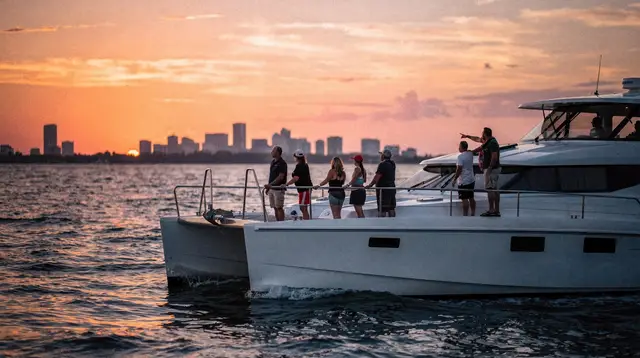
The sunset variant swaps some wildlife-watching time for the river itself: low light over the water, wading birds silhouetted against the color, and a cooler ride in summer. It’s a better date-night or anniversary pick than a wildlife-focused one, though alligators and birds are still often visible along the way.
For an evening on the water with dinner built in rather than a wildlife focus, Sanford also runs longer river cruises with a buffet meal, such as the Sanford St. Johns River buffet dinner cruise, or with a live band aboard on the Sanford St. Johns River dinner cruise with live music. These are a different kind of outing — a relaxed evening on the water with food and music — not a wildlife trip, so don’t book one expecting a narrator pointing out ospreys.
If you’re traveling toward the spring-fed side of the river system rather than the open Sanford stretch, the Orange City: Blue Spring State Park St. Johns River cruise runs closer to that spring itself, which is the better option in winter when manatees have moved into the warmer water there — though for a dedicated manatee viewing plan, read the Blue Spring manatee viewing guide and the month-by-month manatee season guide first, since the platform there is built specifically for that purpose and a general cruise isn’t.
The pontoon mistake
The single most common disappointment on this kind of trip isn’t the weather or the season — it’s the boat. A large, crowded pontoon with forty or fifty passengers and a loud outboard motor pushes a wake and a noise footprint ahead of it that clears wildlife off the banks before the boat gets close. Passengers who booked expecting close-up alligator and bird photos end up with a pleasant but distant river ride and a few specks in their photos. This is the trade every boat format on this page is built around: fewer passengers and a quieter motor mean animals that don’t leave before you arrive. If close wildlife viewing and photography are the goal, the small electric-motor option is worth the extra cost and the earlier booking. If a relaxed narrated ride with the family is the goal, the standard covered cruise is the right, cheaper call — just don’t expect it to deliver the same close encounters.
Distance, timing, and season
Sanford sits about 45 minutes north of central Orlando by car, off the I-4 corridor, which makes this a realistic half-day trip rather than a full-day commitment. It pairs naturally with a morning at Wekiwa Springs, which feeds into the same river system a little upstream, or with a longer loop through Ocala to the north.
Winter (December–February) is the most comfortable season for this cruise: mild air temperatures, clearer water, better odds of wildlife on the banks, and the only realistic window for manatees near the spring tributaries. Summer (June–September) means heat, high humidity, and a near-daily afternoon thunderstorm — a morning departure avoids most of the risk of a trip cut short by weather, and alligators and birds are still active, just in less comfortable conditions for the passengers. Spring and fall sit in between and are a reasonable compromise if winter dates aren’t available.
How it compares to an airboat
It’s worth saying plainly: this is not an airboat tour, and the two shouldn’t be mixed up when booking. Airboats are fast, loud, flat-bottomed craft built for the shallow marsh of the Kissimmee basin south of Orlando, and the noise and speed are part of the appeal for passengers who want an adrenaline ride over the grass. A St. Johns River eco-cruise is the opposite experience — slow, quiet, narrated, and built around getting close to wildlife rather than skimming past it. For a side-by-side look at when each style of boat actually suits what you want to see, the boat-versus-kayak comparison and the alligators: boat versus park guide both cover the trade-offs in more detail, and the dedicated airboat guide has everything specific to that experience.
Planning the rest of the day
A St. Johns River cruise leaves most of a day free either side of it. Paired with a spring visit, it makes a natural half-day-plus-half-day combination — see the Florida springs day-trip planner for how to sequence a spring stop with a river cruise without rushing either one, or the two-day springs and St. Johns River itinerary for a fuller version that includes an overnight. For more on the broader area around Sanford and the river, the St. Johns River destination page rounds up the nearby towns, and the boat cruises category and the things to do around St. Johns River list other operators and formats side by side. If you’re weighing this against other activities in the wider Orlando area, general travel tips cover timing and logistics for the region as a whole, and things to do in Orlando gives the bigger picture for building out a full day.
St. Johns River eco-cruise: frequently asked questions
Where do St. Johns River eco-cruises leave from?
Most depart from Sanford, on the southern shore of Lake Monroe where the St. Johns River widens, about 45 minutes north of Orlando by car. A few operators run from smaller docks farther up the river near the spring tributaries.
Will I see manatees on this cruise?
Only realistically from mid-November through March, when manatees move into the warmer spring-fed sections of the river system. Summer sightings on the open river are rare. For a reliable winter manatee view, the dedicated viewing platform at Blue Spring State Park is a better bet than a general river cruise.
Why does the St. Johns River flow north?
Central Florida is nearly flat, and the St. Johns follows the gentlest downhill grade across the peninsula, which happens to run from south to north into the Atlantic near Jacksonville. It only feels backward because most rivers people know run toward the equator, not away from it.
Covered boat, small electric boat, or sunset cruise — which should I book?
A covered pontoon-style boat with a narrator is the standard one- to two-hour trip and works fine for wildlife viewing and shade. A small electric-motor boat carries far fewer passengers and runs almost silently, which means animals stay put instead of scattering — a real difference for photography. The sunset variant trades some wildlife-watching time for light and color over the water.
Is this the same as an airboat tour?
No. Airboats are flat-bottomed, fan-propelled, and built for speed across shallow marsh in the Kissimmee basin, not for a quiet look at wildlife on the St. Johns River. If speed and noise are what you want, see the separate airboat guide; if you want animals that don’t bolt the second the engine starts, this is the better choice.
How far is Sanford from Orlando?
About 45 minutes by car from central Orlando or the theme park corridor, depending on traffic on the I-4. Sanford also has its own small airport, SFB, used mainly by charter and low-cost carriers.
What’s the best season to go?
Winter (December through February) is the most comfortable, with mild days, better wildlife visibility, and a chance of manatees in the spring tributaries. Summer cruises run hot and humid with a near-daily afternoon thunderstorm, so a morning departure is safer than an afternoon one.
Scenic boat cruises and sunset river tours on GetYourGuide
Verified deep-linked GetYourGuide tours. Book through these links and we earn a small commission at no cost to you.
GetYourGuide does not provide a product photo for this activity — the image shows the meeting point, photographed by us.