Manatee tours at Crystal River: boat, kayak, or boardwalk
Should I book a boat tour, a kayak tour, or just walk the boardwalk at Three Sisters Springs?
A boat tour with an in-water swim gets you closest and is the only format where you can enter the water yourself; a kayak or paddleboard keeps you on the surface and works well for families who don't want to swim; the Three Sisters Springs boardwalk is free-standing, land-based, and the least crowded-dependent option. All three follow the same federal passive-observation rules, so the format changes the experience, not the etiquette.
Three ways to meet a manatee, one set of rules
Crystal River and King’s Bay are the only place in the United States where getting in the water with a wild manatee is legal, and that single fact has spawned three distinct ways to see them: a boat tour with an optional in-water swim, a kayak or paddleboard tour that keeps you on the surface, and a walk along the boardwalk at Three Sisters Springs, which needs no boat at all. None of the three is a shortcut around the other two — they trade proximity, effort, and cost differently, and the right one depends on who’s traveling with you and how you feel about cold water in the dark before sunrise. This guide compares the formats directly. For when to go, see manatee season month by month; for the rules that govern every one of these encounters, see manatee encounter rules and etiquette.
The boat: eco-tour with an in-water swim
A boat tour is the format most people picture when they book a Crystal River trip. A pontoon or small charter boat, typically holding anywhere from six to fifteen guests, motors out from a dock on King’s Bay to one of the springs where manatees gather in cooler months. The captain or a naturalist guide gives a mandatory briefing — usually with a form to sign — covering the federal rules: no touching first, no chasing, no separating a mother from a calf, and passive floating only, arms at your sides. Guests who want to get in the water do so in wetsuits and with a snorkel and mask, holding onto a pool noodle to stay still and buoyant rather than swim actively toward an animal.
Profile: travelers comfortable in open water, snorkelers, anyone who wants the closest legal encounter available anywhere in the country.
Duration: typically 3 to 4 hours door to door, including the briefing, the boat ride out (often 10 to 20 minutes each way across the bay), and 60 to 90 minutes in the water.
Effort and cold: this is the format with the most physical demand. King’s Bay’s springs run at a constant 22°C (72°F) year-round, which feels cold to a swimmer even in a wetsuit, especially in the first ten minutes. You’re floating, not swimming laps, but you need to be relaxed in open water with gear on your face.
Children: most operators set a minimum age for the in-water portion, commonly 6 to 8 years old, with an adult required in the water alongside any child. Non-swimmers and younger kids can usually stay on the boat and watch.
Proximity: the only format where you’re physically in the water at the manatee’s level. On a calm morning with a small group and an animal that isn’t already stressed, this is as close as a legal encounter gets — a manatee may surface an arm’s length away on its own, though you never close that distance yourself.
a Crystal River boat tour with time in the water among the manatees is the standard version of this format, and a naturalist-guided boat tour that also covers the bay’s birds and other wildlife is worth the small premium if you want the biology explained rather than just pointed at.
The kayak or paddleboard: surface observation
A kayak or stand-up paddleboard tour covers similar water — the same springs, often the same section of King’s Bay — but keeps you above the surface rather than in it. Many operators now use clear-bottom kayaks specifically so guests can see manatees passing underneath without entering the water. A guide paddles alongside the group, points out where animals are resting, and enforces the same distance and no-touch rules from the surface: no paddling directly over a resting manatee, no blocking its path to open water.
Profile: families with children too young for the in-water program, travelers who want to see manatees without getting wet or cold, anyone less confident in open water, and people who simply enjoy paddling.
Duration: usually 2 to 3 hours, shorter than the boat-and-swim format because there’s no in-water briefing and gearing-up time.
Effort and cold: low. You stay dry unless you choose to get in, the paddling itself is gentle and guided at a slow pace, and there’s no wetsuit to manage. This is the more comfortable option for anyone who finds the idea of floating in 22°C water off-putting.
Children: the easiest format for kids. A clear kayak lets a child watch a manatee glide beneath the hull without any swimming skill required, and most operators set the minimum age by boat capacity and life-jacket fit rather than a strict cutoff.
Proximity: genuinely good, but different from the boat swim. You’re watching from above rather than sharing the water, so the connection is more visual than physical — manatees still surface to breathe close to a quiet kayak, but the encounter reads more like wildlife-watching than a shared swim.
a clear-kayak tour on the springs where manatees are commonly seen is the closest match to the boat tour’s route without the in-water component, and the same style of trip runs nearby as a manatee-season clear-kayak tour on the Weeki Wachee River if Crystal River’s morning slots are full.
The boardwalk: Three Sisters Springs on foot
The least discussed option is also the simplest: walking the boardwalk and trail around Three Sisters Springs, a US Fish and Wildlife Service refuge reachable on foot from a shuttle stop or, in season, from a small landing by kayak. No boat rental, no wetsuit, no swimming ability required — you look down into clear spring water from an elevated platform and watch manatees rest below, sometimes in loose clusters of a dozen or more on a cold winter morning.
Profile: anyone who wants to see manatees without booking a water-based tour at all — grandparents, visitors on a tight schedule, or families combining the boardwalk with a paid boat or kayak trip elsewhere on the same day.
Duration: flexible, from a 20-minute walk-through to an hour or more with a naturalist talk. There’s no fixed tour length because it isn’t a guided departure.
Effort and cold: the lowest of the three. It’s a flat boardwalk walk, no water contact, no gear.
Children and accessibility: the most accommodating option for young children, older travelers, or anyone with mobility limitations, since the boardwalk is a built, ADA-accessible path.
Proximity: the trade-off is distance. You’re looking down from a platform rather than at water level, so manatees appear smaller and farther away than from a boat or kayak, even though the water itself is often crystal clear enough to see them well. It’s observation, not immersion — closer to a nature walk than an encounter.
Side by side
| Format | Duration | In water? | Cost tier | Best for |
|---|---|---|---|---|
| Boat with swim | 3–4 hours | Optional, in-water swim | Highest | Snorkelers, closest legal contact |
| Kayak or paddleboard | 2–3 hours | Stay dry (optional swim) | Mid-range | Families, non-swimmers, clear-kayak viewing |
| Three Sisters Springs boardwalk | Flexible, self-paced | No | Lowest / free entry to walk | Kids, older travelers, tight schedules |
The rule that doesn’t change with the vehicle
Whichever format you book, the underlying regulation is identical: this is passive observation of a federally protected species, not an interactive wildlife experience. You don’t approach, you don’t chase an animal that swims away, you don’t touch first even if a manatee brushes past you, and you never separate a calf from its mother. A serious operator makes this concrete rather than theoretical — before the boat leaves the dock or the kayaks launch, guests sign a briefing form acknowledging the rules, and guides on the water will call out a correction in real time if someone drifts too close.
If an operator skips the briefing or waves off the paperwork, that’s a sign to book elsewhere next time, not a convenience. The same standard applies at the Three Sisters Springs boardwalk, enforced by refuge staff rather than a tour guide, and it’s worth reading through before you go regardless of which format you choose — see manatee encounter rules and etiquette for the full list.
Group size is the real variable
The format you choose — boat, kayak, or boardwalk — matters less to the actual experience than the size of the group you end up in. A fifteen-person boat charter booked at a discounted late-morning rate can put you at the back of a crowd circling a single manatee that’s already been approached by three other groups that hour, wetsuit-clad strangers bumping elbows in the water while the guide’s voice barely carries over the group.
A six-person kayak tour or a small boat charter, by contrast, gives the guide room to actually manage the encounter, gives the manatee room to surface without a ring of people around it, and gives you enough of the guide’s attention to understand what you’re looking at rather than just floating near it. This is the trap worth naming directly: choosing the cheapest, largest group in the middle of the morning and ending up with the sense of having paid for a floating queue rather than a wildlife encounter. Smaller operators and smaller group sizes cost more per person for a reason.
Booking timing: the early slots go first
Manatees are calmest and most visible in the first hours after sunrise, before boat traffic on King’s Bay picks up and before the water and air warm through the morning. Every operator knows this, and in the November-to-March window it means the 6 or 7 a.m. departures are the first to sell out — often days ahead during a cold snap, when more manatees move into the springs to escape colder water in the Gulf. Booking a mid-morning or afternoon slot because it was available last-minute is how travelers end up with the crowded, later group described above. If an early slot is what you want, book it before you arrive rather than the night before. For the fuller picture of when in the season to visit, see manatee season month by month, and for the route from Orlando, see Crystal River.
Which format fits which traveler
- Solo travelers and confident swimmers who want the closest legal encounter in the country: the boat tour with an in-water swim, booked at the earliest available slot.
- Families with young children or anyone unsure about open water: a clear-kayak tour, which delivers strong sightings without requiring anyone to get wet.
- Grandparents, mixed-ability groups, or a quick stop on a longer day: the Three Sisters Springs boardwalk, paired if there’s time with a shorter kayak or boat trip.
- Groups that can’t agree: split the day — a small-group kayak tour in the early morning for the swimmers and non-swimmers alike, followed by a relaxed boardwalk walk later for anyone who wants a second look without gearing up again.
Whichever format you pick, treat it the same way you would any wildlife encounter: book a small group, take the early slot if it’s offered, and expect the manatee to set the terms of how close it comes. For the practical planning around a springs day beyond Crystal River — Blue Spring, Wekiwa, and the rest of the network — see Florida springs day trip planner, and for a comparable proximity-versus-comfort comparison on a different animal, see dolphin cruise versus swim programs.
Manatee tours at Crystal River: questions travelers ask
Is the boat swim tour better than the kayak tour?
Neither is objectively better. The boat swim tour gets closer because you’re in the water, but it demands more physical comfort with cold water and buoyancy gear. The kayak tour suits people who want to see manatees without getting in, or who are traveling with young children who can’t swim with a group.
Can children do the boat or kayak manatee tours?
Most operators set a minimum age for the in-water boat swim, commonly around 6 to 8 years old, and require an adult in the water with any child. Kayak and paddleboard tours have looser age limits since nobody has to enter the water, and the boardwalk has no age restriction at all.
Do I have to swim with the manatees on the boat tour?
No. Boat tours allow you to stay in the boat and simply watch from the rail if you’d rather not get in King’s Bay. The captain still counts you in the group size and briefs everyone before the boat leaves the dock.
Why do morning tours cost more or sell out first?
Manatees are most active and most visible in the first hours after sunrise, before the water traffic picks up and before the day warms. Operators know this, so early departures are the first slots to sell out in the November-to-March season, not necessarily the most expensive.
Is it legal to touch a manatee?
No. Federal law protects manatees as a threatened species, and the rule is the same for a swimmer, a kayaker, and a boardwalk visitor: watch passively, never initiate contact, never chase an animal that moves away, and let the manatee approach you if it chooses to.
What is the Three Sisters Springs boardwalk and do I need a tour to see it?
It’s a free-standing boardwalk and land trail around the springs where manatees gather, run by the Fish and Wildlife Service. No boat or kayak is required, and no guide is required either, though a naturalist-led walk adds context you won’t get reading a sign.
How big is a typical tour group, and does it matter?
Group sizes on Crystal River tours range from a handful of people in a small kayak group to fifteen or more on a busy boat charter. A smaller group means less crowding around a single animal, calmer water, and a briefing you can actually hear — it changes the experience more than the choice of boat versus kayak does.
Planning the rest of a springs-focused trip? Start with manatee swim at Crystal River for the swim program itself, kayak the Wekiwa Springs run or alligator safety while kayaking Florida’s springs for other paddling days, and a full manatee-season week in Crystal River itinerary if this is the centerpiece of the trip. For the broader tourism-pressure context around these encounters, see what heavy tourism means for the manatees themselves, and for more listings in the area, browse things to do in Crystal River or the full set of manatee tours.
Comparisons to help you choose on GetYourGuide
Verified deep-linked GetYourGuide tours. Book through these links and we earn a small commission at no cost to you.
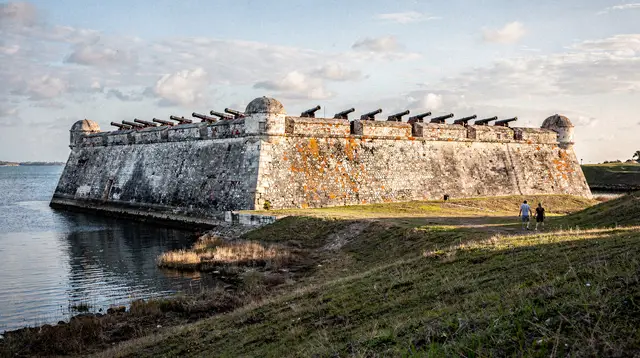
GetYourGuide does not provide a product photo for this activity — the image shows the meeting point, photographed by us.