Manatees and the pressure of tourism
What it feels like to float next to one
The water in Kings Bay is 22 C, the same temperature it holds every day of the year, and the first manatee I saw was not swimming toward me. It was resting a few feet below the surface, barely moving, one flipper drifting like it had nowhere else to be. My guide had told us to stay still and let the animal decide what happened next. For a long minute, nothing did. Then it rose, slow as a held breath, and passed under me close enough that I could see the scars on its back — boat propeller lines, pale and healed over.
That’s the part nobody mentions when they talk about swimming with manatees at Crystal River: how much of the experience is waiting, and how much of the manatee’s life is already marked by proximity to people. I went in expecting a wildlife encounter. I came out thinking about an arrangement — one where an animal that has no reason to trust boats or swimmers tolerates both, because the warm water it needs to survive winter happens to sit in the middle of a Florida town.
Why passive observation is the entire rule
Crystal River and its Three Sisters Springs are the only place in the United States where swimming with manatees is legal, and that permission comes with one non-negotiable condition: passive observation. You can float, you can look, you can let a curious manatee approach and even touch you first. You cannot chase, corner, prod, or reach for one. Federal rules back this up, not a resort’s code of conduct.
The logic is simple once you’ve been in the water. A manatee that gets used to being grabbed learns to associate people with contact it can’t predict or refuse. Multiply one tourist’s five minutes by the hundreds of swimmers who pass through Kings Bay on a busy winter morning, and a manatee that tolerates one hand on its back is a manatee that has stopped reading humans as a risk. That’s not a sentimental concern — it’s how animals end up drifting into boat channels, or staying in water that’s too warm for them to leave when they should. Passive observation exists so the encounter stays optional, for the manatee, every single time.
The full list of what’s allowed and what isn’t is longer than “don’t touch,” and it’s worth reading before you book rather than skimming on the waiver: the manatee encounter rules and etiquette guide covers the specifics — how close is too close, what to do if a manatee surfaces directly under you, why flash photography and loud splashing count as harassment even without contact.
The difference a guide makes
I’ve since talked to people who did the same swim with a different outfitter and came back with a different story: guides who nudged swimmers toward a resting manatee for a better photo, who didn’t call people off when three or four swimmers surrounded one animal at once. Nothing about that is illegal in a technical sense — it’s the accumulation of small violations that turns a legal activity into a harassing one. A cluster of swimmers around one manatee, even if none of them individually breaks the no-touch rule, still pins the animal in place and cuts off its ability to just leave.
The tell, from what I saw, is how a guide behaves the moment nobody else is watching. A good one repositions the group before a manatee looks crowded, says “hands to yourself” without being asked, and is visibly willing to end an encounter early if the animal shows any sign of wanting distance — a shift downward, a slow retreat, tail movement that isn’t just drifting. A guide who’s optimizing for guest satisfaction instead reads those same signs as an opportunity to get everyone closer.
Getting in the water isn’t the only option, either, and it’s worth deciding on purpose rather than defaulting to whichever tour showed up first in a search. The boat versus kayak comparison lays out how a quiet kayak changes the pressure you put on an animal compared to a larger tour boat, and if you do go the kayak route, the kayaking and alligator safety guide covers the other wildlife-awareness basics worth knowing before you’re on the water in Florida generally, not just in Kings Bay.
The arbitrage, not the sin
It would be easy to write this as a case against the whole industry, and I don’t think that’s honest. Manatee tourism funds a real share of the research, the boat-speed enforcement, and the spring restoration work that keeps Kings Bay viable as a refuge in the first place. An empty, silent Crystal River wouldn’t automatically mean safer manatees — it would likely mean less money watching the water and less political will to keep the springs clean. The choice isn’t between tourism and protection. It’s between tourism that funds the same welfare it puts pressure on, and tourism that just extracts the experience and moves on.
That framing changes what the honest question is before you book. Not “should I do this at all,” but:
| Question to ask before booking | What it tells you |
|---|---|
| Does the operator describe a no-touch, passive rule unprompted? | Whether the rule is a habit or a footnote |
| Do they promise a guaranteed close encounter? | A red flag — no honest operator can promise animal behavior |
| Is group size per guide capped, or open-ended? | Smaller groups mean less pressure per manatee |
| Do they mention walking away from a resting or sleeping animal? | Whether they treat rest as off-limits, not just contact |
What I’d tell someone before they book
If an operator’s marketing leads with a guaranteed encounter, that’s the piece of information you need. Manatees are wild animals moving through open water; nobody controls whether one approaches a given group on a given morning. A listing that promises contact is telling you it prioritizes the sale over the animal’s choice not to participate. The ones I trust talk instead about behavior — what you’ll be asked to do, what you won’t be allowed to do, and what happens if the manatees simply aren’t interested that day.
I don’t think the swim is something to feel guilty about. I think it’s something to do carefully, with an operator who treats the passive-observation rule as the whole point rather than a formality read off a waiver. The animal in front of you didn’t choose tourism. The choice sitting entirely with you is who you book it through, and whether you let a manatee ignore you.
For the mechanics of when to go and what the season actually looks like month to month, the manatee season guide and the Crystal River swim guide cover the booking side of this properly. This piece is just about what to weigh before you do.
a small-group kayak and swim tour in Crystal River that keeps guide-to-swimmer ratios low and a private snorkeling tour with manatees in Crystal River are both worth reading closely for how they describe their own rules, not just their prices, before you decide between them.
If Crystal River’s winter crowding gives you pause, Blue Spring State Park offers a no-swim alternative: manatees gather there by the hundreds in winter, viewed only from a boardwalk, which removes the in-water judgment call entirely.
Building this around a whole trip, not just one swim
None of this has to be a single-morning errand squeezed between theme park days. If manatees are the actual reason you’re coming to Florida, the manatee season week in Crystal River itinerary builds a full week around the springs rather than treating them as a side trip, with enough slack days to skip a swim if the weather or the crowds aren’t right. The Florida springs day trip planner is useful even if you’re only giving this a day or two, since it covers which springs are worth the drive from Orlando and which are closer to a parking lot than a wildlife encounter.
Crystal River isn’t the only spring-fed water in this part of the state worth the detour. Rainbow River, near Ocala, is clear enough to paddle without a guided tour and without the manatee crowds, if you want a day on spring water that isn’t built around a single animal encounter. It’s also a useful comparison point for the argument I’m making here: the springs as a counterpoint piece makes the wider case for why Florida’s springs are worth planning around, not just detouring to.
Questions people ask before booking
Is it legal to swim with manatees anywhere else in Florida?
No. Crystal River’s Kings Bay and Three Sisters Springs are the only place in the United States where in-water encounters with manatees are permitted; elsewhere, viewing is from shore, boardwalk, or boat only.
Can I touch a manatee if it approaches me first?
Passive contact initiated by the manatee is generally tolerated under the rules, but you still cannot chase, restrain, or seek out contact yourself, and multiple people touching the same animal in succession is discouraged by responsible operators even when each touch is technically passive.
Does a higher price mean a more ethical operator?
Not reliably. Price often tracks group size and boat comfort more than conduct. The better signal is how the operator talks about the passive-observation rule and whether they mention walking away from resting animals, not what the tour costs.
What happens if no manatees show up during my swim?
It happens, especially outside the cold snaps that push them into the springs in numbers. An operator who is upfront about this possibility, rather than guaranteeing an encounter, is telling you something useful about how they operate more broadly.
Why does the water temperature matter so much to this whole story?
Manatees can’t tolerate water much below about 20 C for long, so Florida’s 22 C springs are a survival necessity in winter, not a scenic bonus — that dependency is exactly why so many animals concentrate in a small, human-accessible area and why the pressure question exists at all.
Is kayaking near manatees a lower-impact option than swimming?
It can reduce the chance of physical contact, but a poorly handled kayak group can still crowd or block manatees; the operator’s conduct matters more than the choice of kayak versus swim.
tours.Opinion
Verified deep-linked GetYourGuide tours. Book through these links and we earn a small commission at no cost to you.
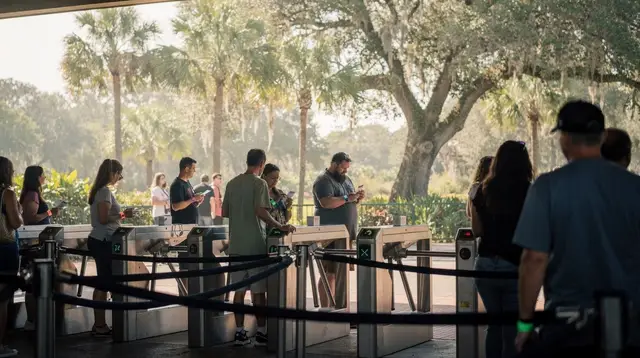
GetYourGuide does not provide a product photo for this activity — the image shows the meeting point, photographed by us.