A river that runs the wrong way
The St. Johns River is one of the few large rivers in North America that flows north, not south. It rises in marshland south of Vero Beach and drains slowly toward Jacksonville and the Atlantic, and around Sanford it widens into Lake Monroe before narrowing again into cypress-lined channels upstream. That slow, north-flowing current is why the area feels different from the theme-park corridor: wide water, moss-hung trees, alligators sunning on the banks, and long views instead of queues.
Sanford sits on the south shore of Lake Monroe, about 35-45 minutes north of Orlando via the I-4, and it’s one of the few parts of the region reachable by SunRail, the weekday commuter train — useful if you’re staying without a rental car and want a change of scenery from International Drive. The historic downtown is compact: brick storefronts from the late 1800s, a riverfront park, and a walkable grid of restaurants and breweries. It grew up as a shipping and celery-farming town before the interstate rerouted traffic around it, which is part of why the core survived largely intact rather than being redeveloped.
North of Sanford, the river country gets wilder and springier. Blue Spring State Park, in Orange City, is the area’s best-known stop and the winter refuge for manatees fleeing the cooling St. Johns. West of Sanford, Wekiwa Springs State Park offers a swimmable spring and a paddle-friendly run through the Wekiva River basin. Both have their own detailed guides linked below; this page is about the region as a whole — what it’s for, when to come, and how the pieces fit together.
What this area is actually for
Three activity families cover most of what visitors do here:
River cruises and wildlife watching. Lake Monroe and the St. Johns support a small fleet of tour boats running from Sanford’s riverfront, ranging from narrated wildlife cruises to buffet dinner cruises with live music. These are a low-effort way to see alligators, wading birds, and, in winter, manatees, without paddling yourself.
Kayaking spring runs. The clear, spring-fed tributaries around Sanford — the Wekiva River, DeLeon Springs run, and others reached from the wider Wild Florida network — are some of the most scenic paddling in central Florida: tannin-dark tea-colored water in the main river against the startling turquoise clarity where a spring feeds in.
Swimming in a spring at a constant temperature. Florida’s springs hold at roughly 22°C (72°F) year-round, which means they’re refreshing in August and, more surprisingly, the warmer option on a cool January morning compared to the outside air. That single fact explains why springs draw crowds in every season, not just summer.
Sanford’s downtown. Beyond the water, First Street and the surrounding blocks hold a dense cluster of independent restaurants, craft breweries, and a Saturday farmers market on the riverfront — a reasonable lunch or dinner stop even if you’re not doing a cruise or a paddle that day.
The manatee season that reshapes everything
This is the single fact that should drive your planning if manatees are the reason you’re coming: manatees gather at Blue Spring from mid-November through March, when the main St. Johns River cools below about 20°C and they move into the constant 22°C water of the spring run to survive. On a cold January morning, several hundred manatees can be visible from the park’s boardwalk at once. Swimming and paddling in the spring run are closed to the public for the whole of that period — the manatees have the water to themselves, and you view them from the boardwalk instead.
Outside that window, roughly April through October, the pattern flips: swimming and paddling in the spring run reopen, but the manatees mostly disperse back into the open river and the wider springs system, so sightings become occasional rather than guaranteed. Neither season is objectively better — it depends on whether you want to swim in a spring or watch manatees from the bank.
| Season | What’s open | What you’ll see |
|---|---|---|
| Mid-November to March | Boardwalk viewing only at Blue Spring; swimming/paddling closed there | Manatees reliably present, often in large numbers |
| April to October | Swimming and paddling reopen at Blue Spring | Manatees mostly dispersed; sightings occasional |
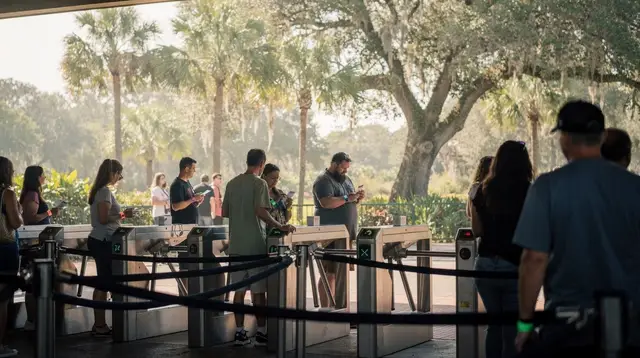
The pitfall worth naming directly: Blue Spring State Park caps the number of vehicles allowed inside, and on winter weekends it fills and closes its gate — often before 10 a.m. Arriving mid-morning on a Saturday or Sunday in manatee season is the single most common way to be turned away at the entrance. Arrive at opening, or visit on a weekday, or check the park’s real-time capacity status before you drive out. This applies to the park itself; the details of viewing manatees there have their own page at Blue Spring manatee viewing.
Getting around
Sanford is reachable three ways from the Orlando area, and each suits a different kind of visit:
- By car, it’s 35-45 minutes from central Orlando via the I-4, similar to the drive out to Winter Park or the theme park corridor in the opposite direction. A car is the only practical way to also reach Blue Spring or Wekiwa Springs in the same day, since neither is on public transit.
- By SunRail, the weekday commuter train stops in downtown Sanford, a walk from the riverfront and most restaurants. It doesn’t run to the springs and doesn’t run on weekends, which matters given that weekends are also when Blue Spring is most likely to fill up — so a SunRail day trip pairs best with a cruise and downtown time, not a spring visit.
- On an organized tour, several kayak and cruise operators include pickup from Orlando-area hotels, which removes the car-versus-train decision entirely for a single activity.
For the wider question of whether to rent a car for the whole trip, see renting a car in central Florida and driving the I-4 and traffic.
River cruises from Sanford
Sanford’s riverfront is the departure point for several cruise operators on Lake Monroe and the St. Johns, ranging from a couple of hours to a full evening. A narrated eco-cruise focuses on wildlife — alligators, ospreys, and in winter the occasional manatee in open water — while dinner cruises add a buffet and live music for an evening on the water without any planning beyond showing up at the dock.
a buffet dinner cruise on the St. Johns River departing Sanford covers the evening version: a couple of hours on Lake Monroe with a full buffet and music included, no advance menu planning needed. For a specific weekly departure with a different format, the Tuesday taco buffet cruise on Lake Monroe runs on a set weekly schedule and tends to book out for that one evening. If you’d rather have music as the centerpiece, look for the live-music dinner cruise option from the same dock when checking availability, since exact schedules shift by season. For a straightforward daytime wildlife cruise without dinner, the eco-cruise route is covered separately at St. Johns River eco cruise.
Kayaking the spring runs
The paddling here is a different experience from a kayak on open water: narrow, clear channels, overhanging cypress, and — where a spring feeds in — a visible line where tannin-brown river water meets turquoise spring water. Several outfitters run guided kayak trips into the Blue Spring run and the wider Wild Florida spring network from bases near Sanford, useful if you don’t want to manage your own put-in and take-out.
a guided kayak tour on the Blue Spring run runs outside the winter closure window, when paddling there reopens; check the season before booking, since the run is closed to paddlers during manatee season regardless of tour availability. A similar Orlando-departure version, the Orlando-based Blue Springs kayak tour with transport included, adds pickup for visitors without a car. For a spring with a different character — slower current, a historic pancake house at the put-in — a guided kayak tour at De Leon Springs State Park is a short drive further north. Paddlers wanting a broader wild-Florida route beyond the spring runs can look at the VIP Wild Florida kayak adventure, which covers a wider stretch of river and marsh in one outing.
For technique, alligator etiquette, and how a guided run differs from a self-guided rental, see kayaking the Wekiwa Springs run and kayaking alligator safety in Florida.
Where this fits in a wider trip
Sanford and the St. Johns River work as a half-day add-on to an Orlando-based trip, or as the centerpiece of a slower, nature-focused day away from the parks. It pairs naturally with the wider springs country covered in Florida springs day trip planner, and with the itinerary at two days springs and St. Johns River if you want to build a dedicated overnight around it rather than a single day. Compare it against the Crystal River manatee-swim experience if you’re deciding between the two: Crystal River is the place where swimming with manatees is legal, while Blue Spring is viewing-only, closer to Orlando, and free of the 1 h 45 drive west.
Manatee timing is the variable most worth planning around across the whole region — see manatee season month by month for how Blue Spring compares to Crystal River across the calendar, and manatee tour: boat versus kayak for choosing a format once you’ve picked a season.
Frequently asked questions about Sanford and the St. Johns River
How far is Sanford from Orlando?
About 35-45 minutes by car via the I-4, depending on traffic and where in the Orlando area you start. It’s also reachable by SunRail on weekdays, with the station a short walk from downtown.
When can you see manatees at Blue Spring?
Manatees gather in large numbers from mid-November through March, when the St. Johns River cools and they move into the spring’s constant 22°C water. Outside that window, sightings are occasional rather than reliable, since most manatees disperse into the open river.
Can you swim at Blue Spring in winter?
No. Swimming and paddling in the spring run close for the entire manatee season, mid-November through March, so the manatees have the water without disturbance. Viewing is from the boardwalk instead.
Why does Blue Spring close its gate on weekend mornings?
The park caps the number of vehicles allowed inside at one time, and on winter weekends that cap is often reached before 10 a.m. Arriving at opening, visiting on a weekday, or checking the park’s posted capacity status before driving out are the reliable workarounds.
Do you need a car to visit Sanford?
Not for downtown Sanford itself, which is reachable by SunRail on weekdays and walkable once there. You do need a car, or a tour with transport included, to reach Blue Spring or Wekiwa Springs, since neither is on public transit.
What’s the difference between the St. Johns River and the spring runs around it?
The St. Johns is the wide, slow, tannin-stained main river that flows north past Sanford. The spring runs — at Blue Spring, DeLeon Springs, and Wekiwa — are short, clear tributaries fed by a constant-temperature spring, distinct in color and temperature from the river itself.
Is a dinner cruise from Sanford worth it compared to a daytime wildlife cruise?
They serve different purposes. A dinner cruise is an evening out with food and music included and wildlife viewing as a secondary benefit; a daytime eco-cruise is focused specifically on spotting alligators, birds, and manatees, with better sightlines and no distraction from a meal.
How does Blue Spring compare to Crystal River for manatees?
Blue Spring is closer to Orlando, at roughly 40-50 minutes, and viewing is from a boardwalk only — no swimming with manatees is permitted there. Crystal River, about 1 h 45 from Orlando, is the one place in the country where swimming alongside manatees is legally permitted, in a different part of the state entirely.