Biking the Gulf beaches: the Pinellas Trail and beyond
Is biking around St. Petersburg and the Gulf beaches easy for casual riders?
Yes. The terrain is essentially flat across Pinellas County, so a beach cruiser or an e-bike is enough for most people, no cycling experience required. The main challenges are heat and afternoon storms in summer, not hills.
Why the terrain does the heavy lifting
Pinellas County, the peninsula that holds St. Petersburg and the barrier island beaches, is close to sea level from end to end. There is no climb anywhere on the routes below, which is unusual for a guide about biking and worth saying plainly: the limiting factor here is never fitness, it is heat and timing. A family with mixed riding ability, a retiree who has not biked in years, or a teenager on a rental cruiser can all cover the same ground without any route-finding around hills, because there are none. That single fact is what makes this stretch of the Gulf coast one of the more approachable biking destinations in Florida, more forgiving than the hillier terrain some visitors expect from a “bike ride” back home.
This guide covers self-guided and rental biking around St. Petersburg and the Gulf beaches — the Pinellas Trail, the bayfront paths, and the barrier islands. It does not cover St. Petersburg’s guided city tours on foot or the water-based activities (kayaking, paddleboarding, dolphin cruises); those live on their own pages, linked further down.
The Pinellas Trail: the spine of the network
The Fred Marquis Pinellas Trail is a paved former rail corridor that runs close to 50 miles (80 km) north to south through the county, with connecting loop sections that push the wider network toward 75 miles (120 km). Almost nobody rides it end to end in one day; the practical unit is a 5 to 15 mile out-and-back or point-to-point segment, chosen for what is nearby rather than for trail mileage.
The most rewarding sections for a visitor without a car pass through downtown St. Petersburg, where the trail threads past murals, breweries, and small parks before continuing toward Gulfport and, further south, Tierra Verde. North of downtown, the trail runs through quieter residential stretches with less to stop for. Shade is patchy rather than continuous — long segments run beside roads or through open corridor — so treat the ride like a beach outing for sun exposure, not like a shaded forest path.
The trail crosses numerous signalized intersections. It is well marked and mostly separated from car traffic, but riders should still slow and look at every road crossing, particularly with kids.
Bayfront paths and the downtown loop
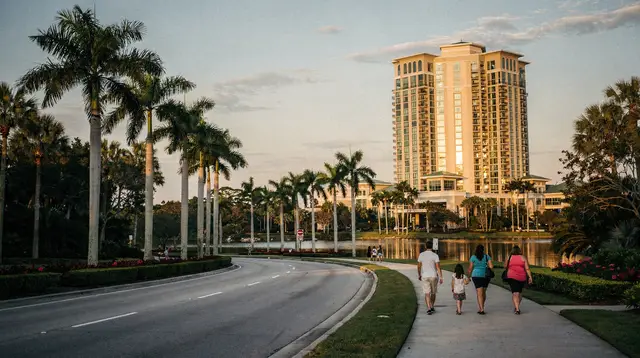
Separate from the Pinellas Trail, St. Petersburg’s downtown waterfront has its own network of paved paths along Tampa Bay, connecting a string of parks — North Straub Park, South Straub Park, Vinoy Park — with views across the water rather than a straight commuter corridor. This is the easiest possible introduction to biking here: flat, scenic, short enough to do in under an hour, and close to cafés and bike rental counters if you want to stop.
It also connects naturally with two of the city’s better free attractions. Riders who linger downtown often pair a bayfront loop with a walk through the mural district, or fold it into a longer guided look at the city’s neighborhoods on a day that mixes biking with walking.
Barrier island rides: flat, breezy, and short on shade
West of downtown, across one of several causeways, the barrier islands — St. Pete Beach, Treasure Island, Madeira Beach, and further south, Fort De Soto Park — offer their own short, flat routes, usually along beach access roads rather than a dedicated trail. These rides tend to be shorter, more about scenery and beach stops than mileage, and popular as an early-morning or late-afternoon activity bracketing a beach day.
Fort De Soto Park, at the southern tip of the barrier chain near Tierra Verde, has paved multi-use trails through mangrove and open shoreline that feel more like a nature ride than an urban one. A guided e-bike route through the park is a straightforward way to see it without navigating unfamiliar parking and trailheads:
a guided e-bike ride through Fort De Soto’s shoreline and mangrove trailscovers several miles of the park’s paved paths with a guide setting the pace, which removes the trial-and-error of finding the better sections on a first visit.
Wind is a bigger factor on the islands than on the mainland trail — open causeways and beachfront roads can be genuinely gusty, which slows an unassisted bike more than the flat terrain would suggest. It is one more reason an e-bike is worth the upcharge on these routes specifically.
Renting a bike — or an e-bike
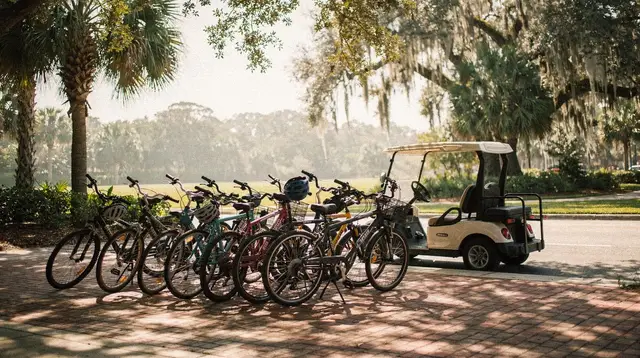
Daily rental shops cluster near St. Pete Beach, Treasure Island, and downtown St. Petersburg, and most rent by the hour, the half day, or the full day, with beach cruisers as the standard option and e-bikes increasingly common as a step up. A basic cruiser is genuinely enough for a bayfront loop or a short island ride. An e-bike changes the calculation on anything longer: a Pinellas Trail segment past about 10 miles, a full loop that mixes downtown with the islands, or any ride attempted in the mid-morning to early-afternoon heat of summer. Pedal assist does not remove the sun, but it removes the fatigue that makes heat feel worse, and it lets a group with mixed fitness — a fit adult and a tired kid, for instance — stay together at one pace instead of splitting up.
Two guided e-bike options cover the more scenic parts of the city without requiring a separate rental transaction:
a guided e-bike tour through downtown’s sights and mural-covered wallsis a compact way to see the bayfront parks and the mural district in one outing with a guide narrating along the way, useful for a first visit when self-navigating feels like extra work on top of the ride itself.
For a quieter route away from downtown traffic, a guided bike tour around Lake Maggiore’s shoreline paths trades city scenery for a wooded, lake-adjacent loop with birdlife and far less road crossing, a reasonable choice for riders who want flat and scenic without downtown’s stop-and-go.
Neither of these requires prior biking experience, and both include the bike, which sidesteps a separate rental pickup and return.
What to pack, and when to start
None of these rides demand technical gear, but the Florida sun and heat reward a short checklist:
| Item | Why it matters |
|---|---|
| Water, more than feels necessary | Trail fountains are spaced unevenly; carry your own rather than relying on finding one |
| Reef-safe sunscreen, reapplied | Open pavement offers little shade; reapply every couple of hours on rides over 90 minutes |
| Hat or ventilated helmet | Direct sun on a flat, shadeless stretch adds up faster than the mileage suggests |
| Light, breathable clothing | Humidity makes heavy fabric miserable even at moderate temperatures |
| Phone with the route saved offline | Cell coverage is generally fine, but a saved map avoids relying on it |
| A dry bag or handlebar pouch | Keeps water and a phone accessible without stopping to dig through a backpack |
Start early. A 7 or 8 a.m. departure puts the coolest hours and the softest light on the ride, and on the barrier islands it also means beating the beach traffic on the access roads. Late afternoon, after 5 p.m. in summer, is the other workable window, once the day’s heat has broken — though see the storm timing below before planning around it.
The afternoon storm, and the trap of a midday summer ride
Central Florida’s Gulf coast gets a real thunderstorm on most summer afternoons, typically building through the early afternoon and breaking sometime between 2 and 5 p.m. It rarely lasts more than an hour, but it is not a light drizzle: lightning is frequent, and the corridor between Tampa and Orlando ranks among the most lightning-struck parts of the United States. A bike ride caught in the open on a causeway or an exposed trail segment during one of these storms is a genuinely bad place to be. Plan any June-through-September ride for the morning, and treat a darkening sky in the early afternoon as a signal to head for cover, not to push on.
The bigger trap is not the storm itself — it is starting at midday in the first place. A noon departure in July or August, on an unshaded stretch of the Pinellas Trail or a barrier island access road, routinely produces a heat index above 100°F (38°C). Water stops are spaced unevenly, shade is scarce on the more open segments, and the ride back can feel considerably harder than the ride out once fatigue and dehydration set in. This is the single most avoidable mistake on these routes: ride at 7 a.m., not at noon, from June through September. Spring and fall carry none of this risk and are genuinely pleasant for biking at almost any hour; see the seasonal notes on summer heat and storm timing and, for trip planning around the broader storm season, the hurricane season travel guide.
Guided rides versus renting on your own
A self-directed rental makes sense for a short bayfront loop, a quick out-and-back on the Pinellas Trail, or a beach-adjacent island ride where the route is short and the destination obvious. A guided e-bike tour earns its higher price on a first visit to somewhere less obvious to navigate — Fort De Soto’s park trails, or a route that mixes downtown murals with bayfront parks — because the guide handles pacing, route-finding, and often narration about what you’re passing, and the bike itself is included rather than a separate transaction.
Neither approach requires cycling experience or special fitness, given the flat terrain throughout the county. The choice comes down to whether you’d rather figure out a route yourself with a rental, or let someone else set the pace on a first pass through a less familiar area.
Prices in 2026 (fourchettes)
Prices vary by season, shop, and how far in advance you book; treat these as planning ranges rather than fixed rates, and expect taxes and any resort or booking fees to add to the sticker price.
| Option | Typical 2026 range |
|---|---|
| Standard bike rental, half day | 15 to 30 USD |
| Standard bike rental, full day | 25 to 45 USD |
| E-bike rental, half day | 35 to 60 USD |
| E-bike rental, full day | 55 to 90 USD |
| Guided e-bike tour (city or park) | 60 to 110 USD per person |
Weekday rentals and the shoulder months of April, May, October, and November tend to sit at the lower end; weekend and peak-winter pricing (December through March) runs higher.
Biking the Gulf beaches: questions answered
How long is the Pinellas Trail?
The paved former rail corridor runs close to 50 miles (80 km) north to south across Pinellas County, and connecting loop sections push the wider network toward 75 miles (120 km). Nobody rides it end to end in one outing; most visitors pick a 5 to 15 mile stretch.
Do I need an e-bike, or is a regular bike enough?
A standard bike is fine for a short bayfront loop or a barrier island out-and-back. An e-bike earns its higher rental price on anything past about 10 miles, in summer heat, or if the group includes riders of different fitness levels who want to stay together.
Where can I rent a bike near the beaches?
Daily rental shops cluster around St. Pete Beach, Treasure Island, and downtown St. Petersburg, and several rent by the hour, the half day, or the full day. Guided e-bike tours that include the bike are also common and remove the logistics of pickup and return.
Is the Pinellas Trail shaded?
Only in patches. Long stretches run beside roads or through open corridor with little tree cover, especially south of downtown St. Petersburg. Treat it like a beach outing for sun exposure, not like a forest trail.
What is the biggest mistake people make riding here in summer?
Starting at midday in July or August. The heat index on open pavement regularly passes 100°F (38°C), water fountains are spaced unevenly along the trail, and there is little shade to retreat to. An early morning start avoids all of it.
Are the barrier island rides flat?
Yes, without exception. Pinellas County tops out at a few dozen feet above sea level, so every route described here — trail, bayfront, or barrier island — is flat. The only elevation change most riders notice is a bridge ramp.
Can kids ride these routes?
Bayfront paths and the barrier island loops work well for kids old enough to handle a bike independently, since they are flat and mostly separated from traffic. The Pinellas Trail crosses several signalized roads, so younger riders need supervision at intersections.
What should I bring on a half-day ride?
More water than feels necessary, reef-safe sunscreen reapplied every couple of hours, a hat or helmet with ventilation, and a phone with the route saved offline. A dry bag or handlebar pouch keeps everything accessible without stopping to dig through a backpack.
For a broader sense of what else fills a day on this side of the state, see the St. Petersburg destination overview, the things-to-do listings for St. Petersburg and Clearwater, the wider bike, segway, and cart category, or general travel tips for the region. Nearby coastal towns worth a separate look include Sarasota and Bradenton, both with their own flat, bike-friendly stretches. If water activities interest you more than pedaling, the Gulf beaches paddleboarding guide, the paddle out to Caladesi and Honeymoon Island, and dolphin watching near Clearwater cover that ground instead.
Guided bike, Segway and golf cart tours on GetYourGuide
Verified deep-linked GetYourGuide tours. Book through these links and we earn a small commission at no cost to you.
GetYourGuide does not provide a product photo for this activity — the image shows the meeting point, photographed by us.