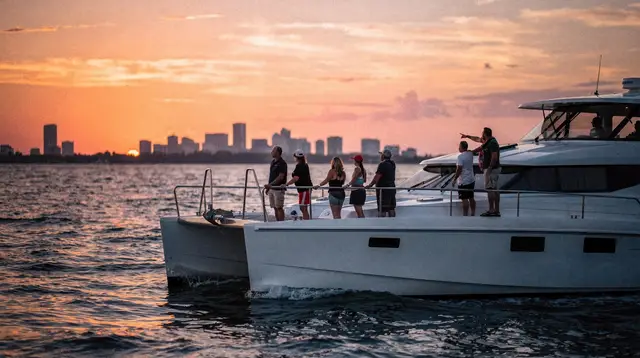
Sarasota Bay dolphin and wildlife cruise
What makes a Sarasota Bay dolphin cruise different from other Florida dolphin tours?
Sarasota Bay's resident bottlenose dolphins have been studied since 1970 by the Sarasota Dolphin Research Program, one of the longest-running wild dolphin studies in the world. Many boat crews reference individual dolphins by their dorsal fin markings, which makes the standard two-hour cruise noticeably more educational than a generic sightseeing run.
Sarasota Bay has one of the best-documented wild dolphin populations anywhere on the water, and it changes what a two-hour boat trip here actually looks like.
Why Sarasota’s dolphins are different
The Sarasota Dolphin Research Program, run jointly by Mote Marine Laboratory and the Chicago Zoological Society, has followed the bay’s resident bottlenose dolphins since 1970. That is more than five decades of continuous data on individual animals, their family lines, and their ranges within the bay. Local boat crews draw on that same body of knowledge: many can point out a dorsal fin nick or scar pattern and identify a specific dolphin, sometimes even naming one that researchers have tracked for years.
That difference matters on the water. A crew that knows the resident population tends to run a more paced, observational trip, watching how a pod is behaving before approaching, rather than a fast run-and-gawk loop. It is a subtler experience than a marketing photo suggests, and it rewards a quieter passenger.
The route: seagrass, sandbars, and the passes
A typical two-hour cruise out of a Sarasota-area marina follows a loop rather than a straight line. Expect:
- Seagrass flats close to shore, where the boat slows and the crew watches for feeding dolphins, rays, and wading birds working the shallows.
- A sandbar stop, often mid-cruise, where the captain cuts the engine and drifts. This is usually the quietest window and a good stretch for photos of the shoreline and any birds working the exposed sand.
- Bird colonies on spoil islands and mangrove fringes — pelicans, osprey, herons, and roseate spoonbills in season nest and roost on small islands throughout the bay, and captains generally give these a wide, engine-idle pass so as not to flush nesting birds.
- A pass, the narrow cut where the bay opens to the Gulf of Mexico. Passes concentrate baitfish on moving tides, and dolphins often work these edges to feed. This is usually the most active stretch of the trip and the one crews build the route around.
The whole loop runs close to shore and through calm inland water, which is part of why it suits people who get queasy on open Gulf water: most of the route sits inside the bay, sheltered by barrier islands.
Best time to go
| Factor | Better | Worse |
|---|---|---|
| Time of day | Morning, before wind builds | Mid-to-late afternoon, choppier |
| Season | Winter (Dec–Feb), calmer and cooler | Summer afternoons, heat and storm risk |
| Wind | Light or none | Onshore breeze over 15 mph |
| Tide | Crew’s call, varies by pass | — |
Morning departures, ideally the first trip of the day, give the flattest water and the clearest light for spotting fins at a distance. Winter is the more comfortable season overall — cooler air, calmer bay, and typically clearer water — while summer cruises should be booked early to beat both the wind and the almost-daily afternoon storm pattern that builds over Central Florida and the Gulf coast through the warmer months.
What to expect on board
Boats range from open-air pontoons carrying a dozen or so passengers to larger catamarans on the bigger operators. Bring sun protection — the bay offers little shade — and expect the crew to hand out a short safety briefing before departure covering seating during maneuvers.
Behavior around dolphins is not optional etiquette, it is federal guideline. The Marine Mammal Protection Act keeps commercial operators to a set of practices, and a well-run boat follows them closely:
- Stay seated whenever the boat slows or turns near dolphins. Crews need passengers still and predictable to maneuver safely and to avoid startling the animals.
- Do not call, whistle, or splash to try to draw dolphins closer. It does not work reliably, and repeated attempts across many boats is exactly the kind of pressure that habituates wild dolphins to human contact, which is bad for the animals long-term.
- No feeding, ever — it is illegal and it is also the single fastest way to make a wild dolphin population dependent on boats, which then leads to more boat strikes and entanglements.
- Keep hands inside the rail and cameras secure; the crew will not chase alongside dolphins at close range, both for the animals’ sake and for passenger safety.
The booking trap: sighting guarantees
Some operators market a refund or a free rebooking if no dolphins are spotted. It sounds like a customer-friendly policy, and on paper it is. In practice, it creates the wrong incentive: a crew under pressure to “deliver” a sighting is more likely to chase pods, cut across their path, or linger too close for too long trying to guarantee the photo that justifies the promise. None of that is good for the dolphins, and it is not usually a good ride either — the more relaxed, better-informed trips tend to come from crews who let the animals set the pace.
A better way to choose an operator is to ask how they talk about the resident population — whether they mention individual dolphins, the research program, or how long they have run this same route. That kind of specificity says more about trip quality than any refund clause.
What this cruise does not cover
This is a boat-based wildlife trip on open bay water — it does not include mangrove tunnels (a separate paddling trip through Sarasota’s backwater mangrove creeks) or beach time on Siesta Key, both of which have their own dedicated pages linked below. It is also not a swim program: no operator here puts passengers in the water with dolphins, and none legally could — wild dolphin swims are not permitted in US waters. If a swim-with-marine-life experience is the goal, that only exists with manatees, and only at Crystal River’s Three Sisters Springs, a different species, a different season, and a three-hour drive north.
Getting there from Orlando
Sarasota sits about 210 kilometers (130 miles) southwest of Orlando, roughly two hours and 15 minutes by car via I-4 and I-75. That is long enough that most visitors either treat it as a full day trip departing early, or pair it with a Gulf coast overnight — Bradenton and Anna Maria Island sit just north, and St. Petersburg and Clearwater are within reach along the same coastline. A morning dolphin cruise pairs naturally with an afternoon on Siesta Key or a stop at the Ringling Museum if the day allows for both.
Most visitors drive themselves; see renting a car in Central Florida for what a rental adds to the trip, and tolls, SunPass, and E-Pass explained for what to expect on I-4 and I-75 along the way. The I-4 and traffic guide covers the corridor’s typical slow points, which matter more for a same-day return than for an overnight stay.
Other ways to see Sarasota Bay’s wildlife
A dolphin cruise is one of several ways to get out on Gulf coast water, and it is worth knowing where it sits among the alternatives before booking. Dolphin cruise versus swim programs lays out why a boat-based sighting trip and a true swim-with-wildlife program are not interchangeable — Sarasota Bay only offers the former.
For a slower, closer-to-the-water alternative, manatee tour by boat versus kayak walks through the tradeoffs of a guided boat versus a self-paddled trip, the same choice that comes up around mangrove tunnels here. Seeing alligators: boat versus park is a useful comparison for travelers weighing an airboat trip in the interior against a coastal cruise like this one — different animal, different habitat, but the same basic question of pace and closeness. If a hands-on wildlife encounter matters more than a sighting cruise, the manatee swim at Crystal River is the one legal, regulated in-water program in the state, though it is a three-hour drive north and a different season entirely.
Combining this cruise with the rest of the Gulf coast
Because Sarasota sits roughly midway along Florida’s Gulf coast, a dolphin cruise here is easy to combine with stops further up the same shoreline. Bradenton and its barrier islands sit just north of Sarasota Bay, and Tampa, St. Petersburg, and Clearwater are all within range of a multi-stop Gulf coast day or overnight. On the water elsewhere along the coast, shelling boat trips out of Anna Maria Island, gulf beaches bike rides, and kayaking to Caladesi and Honeymoon Island all draw on the same calm, barrier-island water this cruise does. For dolphins specifically, dolphin watching in Clearwater and a Tampa Bay sunset cruise cover the same behavior — resident bottlenose pods working seagrass flats and passes — on a different stretch of coastline.
Fitting this into a longer trip
Travelers building a full itinerary around the Gulf coast rather than a single day trip have a few starting points worth reading first. Orlando versus Tampa as a base and where to base yourself around Orlando both cover how much driving a Gulf coast day trip like this one adds depending on where a trip is anchored. For a ready-made plan, the three-day Orlando-Tampa-Gulf taster itinerary and the longer seven-day Orlando parks and Gulf beaches itinerary both build in time for a Sarasota-area boat trip alongside theme park days.
Planning notes
Marinas around Sarasota Bay and nearby Longboat Key and Venice all run similar dolphin-and-wildlife trips, so location within the bay area matters less than departure time and crew reputation. Reserve ahead during winter weekends and school holiday weeks, when the calmer season draws the most demand. Bring water, sun protection, and a light layer — the bay breeze on an open boat feels cooler than the air temperature suggests, even in winter.
For travelers weighing a boat cruise against other ways to see Sarasota’s water and wildlife, the choice usually comes down to pace: a dolphin cruise is a guided, seated wildlife-watching trip, while kayaking the mangrove tunnels is slower, closer to the water, and more physically active. Both are reasonable ways to spend a morning on this stretch of the Gulf coast, and neither should be booked around a promise no honest operator can make.
Book the Sarasota Bay dolphin watching and sandbar boat tourFor a similar trip further north on the coast, Anna Maria Island’s dolphin cruise covers a different stretch of bay and passes. Around St. Petersburg, the St. Petersburg sunset and dolphin cruise combines wildlife watching with evening light over Tampa Bay. Closer to Siesta Key itself, the Siesta Key sunset cruise is a lower-key, later-in-the-day alternative for travelers based on the key.
Sarasota Bay dolphin cruise FAQ
How long does a Sarasota Bay dolphin cruise last?
Most trips run about two hours, covering open bay water, a seagrass flat or two, a sandbar stop, and a pass where dolphins often feed. Some operators offer 90-minute or sunset-length variants.
Is it better to go in the morning or afternoon?
Morning departures, before the wind picks up, give calmer water and better visibility for spotting fins and identifying individual dolphins. Afternoon sea breezes on Sarasota Bay can chop up the surface by early afternoon most of the year.
What time of year has the best conditions?
Winter (December to February) tends to bring flatter water and cooler, more comfortable air on board. Summer afternoons add heat, humidity, and the daily storm risk, so a winter or early-morning summer booking is the more reliable choice.
Are dolphin sightings guaranteed?
No responsible operator can guarantee a sighting, since dolphins are wild animals that move with feeding conditions. Be wary of any tour marketed around a sighting refund or guarantee, since that incentive pushes boats to chase or crowd animals rather than watch from a respectful distance.
How should passengers behave when dolphins are nearby?
Stay seated during any maneuver near dolphins, keep hands and cameras inside the rail, and never whistle, call out, or splash to try to attract them. Crews that ask for this behavior are following the same federal guidelines that protect the animals from habituation to boats.
Can I swim with dolphins on this type of cruise?
No. Wild dolphin swim programs are not legal in Sarasota Bay; these are viewing cruises from the boat only. Crystal River’s Three Sisters Springs is the one place in the country with a legal, regulated manatee swim program, and it is a separate species and a separate trip.
How far is Sarasota from Orlando?
About 210 kilometers (130 miles), roughly two hours and 15 minutes by car, making it a long day trip or better as an overnight stop on a two-coast itinerary.
Does the cruise cover mangrove kayaking or Siesta Key beach time?
No. A dolphin cruise stays on open bay water and passes; mangrove tunnels are a separate kayak trip, and Siesta Key’s beach is its own stop, covered on their own pages.
Dolphin watching cruises along the Gulf coast on GetYourGuide
Verified deep-linked GetYourGuide tours. Book through these links and we earn a small commission at no cost to you.
GetYourGuide does not provide a product photo for this activity — the image shows the meeting point, photographed by us.